Quality Is Doing The Job Right, The First Time!

Quality Is Doing The Job Right, The First Time!
Dallas gets a lot of rain. The area sees around 50 inches of rainfall annually, spread across well over 100 days of precipitation each year. Add in the temperature changes between warm, humid summers and winters that occasionally dip low enough to lift and crack aging shingles, and your roof takes a real beating season after season. Many homes in Dallas also sit beneath mature trees that drop debris, hold moisture against shingles, and leave roofs vulnerable to moss growth and soft spots on the roof decking. For a roof that is already 15 to 20 years old, that kind of ongoing stress adds up quickly, and what starts as a few curling shingles can quietly turn into water reaching your roof decking or interior.
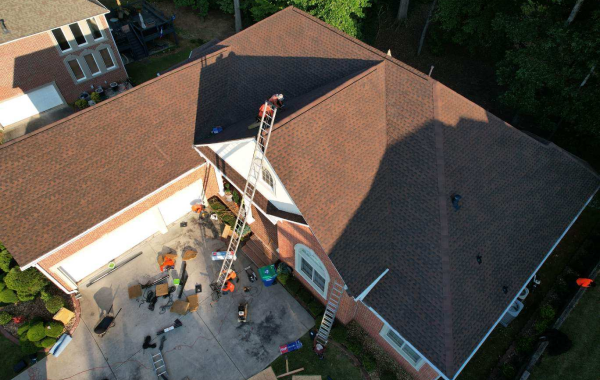
That is where a full residential roof replacement makes a real difference. Rather than patching problems as they surface, a new roof gives your home a complete layer of protection built to handle what this area actually throws at it, from spring storms to the freeze and thaw cycles that work at shingle edges over winter. Paramount Roofing & Consulting works with Dallas, GA homeowners on exactly this kind of project, bringing local knowledge about Paulding County’s building codes, common roof designs in the area, and the materials that hold up best under Georgia weather conditions. The result is a roof built to protect your home and your investment in your property for decades to come.
A roof replacement is a significant project, and understanding each step in advance helps make the process more manageable for homeowners.
Not every roofing material handles Georgia’s weather the same way, and what works well in a drier climate may not hold up here. In Paulding County, your roof needs to stand up to spring hailstorms, heavy seasonal rainfall, and the kind of temperature changes that work at shingle edges year after year. Picking the right material for your specific home makes a real difference in how long your new roof lasts.
| Consideration | What It Means for Dallas Homeowners |
|---|---|
| Hail and Impact Resistance | Asphalt shingles are subject to granule loss from hail strikes: higher-grade options offer better resistance to surface damage |
| Wind Uplift | Paulding County code requires reinforced flashing and underlayment to keep shingles anchored during high winds |
| Moisture Management | Synthetic underlayment resists UV breakdown and leaks, extending performance in a high-rainfall region |
| Seasonal Sealing | Fall replacements benefit from cooler, lower-humidity conditions that allow shingle granules to bond more effectively |
| Roof Design Compatibility | Gable and hip roofs, common in this area, require careful shingle alignment to prevent ice dam formation during winter freezes |
Asphalt shingles remain the most practical and widely used option for Dallas homes, and when paired with quality underlayment and proper installation, they can protect your home for 2 to 3 decades. Understanding these factors before your project starts helps you make a confident choice that fits both your home and your long-term investment in your property.
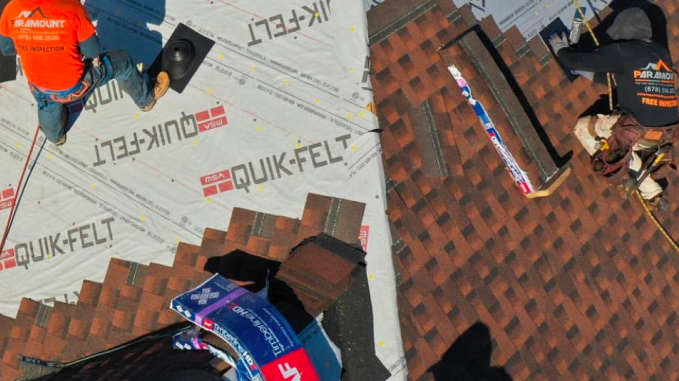
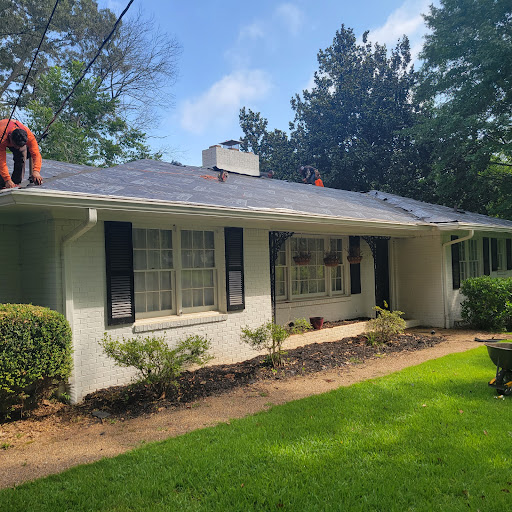
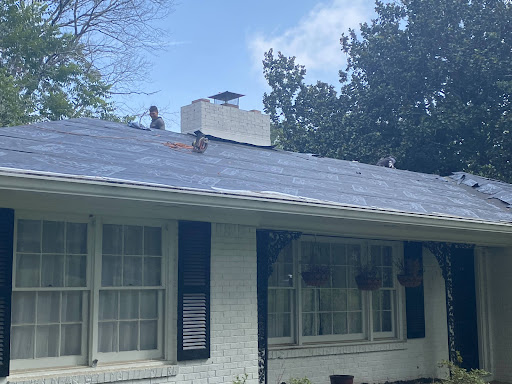
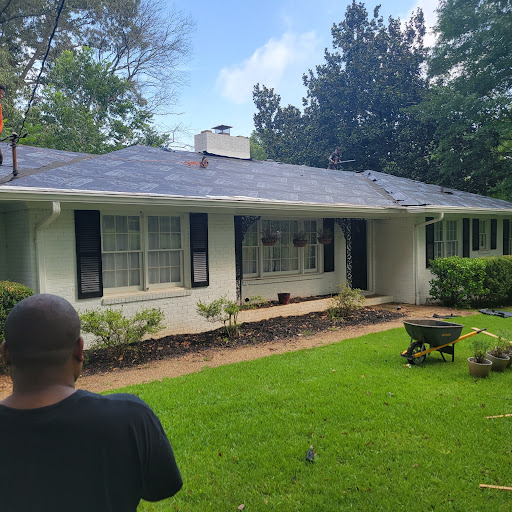
Once the old roofing is stripped away, any soft, rotted, or moisture-damaged roof deck boards are replaced before new materials go down. This matters especially on older Dallas-area homes where undetected leaks may have been quietly working at the wood beneath the shingles for years.
Chimneys, vents, and skylights are among the most common sources of leaks on homes in this area, and properly installed flashing around each one is a standard part of every replacement we do. Getting these details right is what keeps water out long after the shingles themselves are performing well.
Ridge caps and drip edge installation along your roof’s perimeter protect the most vulnerable points where wind and water tend to find their way in. In a region that sees frequent gusts during storm season, a tightly sealed edge line makes a meaningful difference in how your roof holds up over time.
Synthetic underlayment goes down beneath every shingle field, adding a water-resistant layer that stands up to UV exposure and moisture far better than traditional felt in Georgia’s conditions. Paulding County requires specific underlayment standards on new installations, and meeting that code is built into every project we complete.
Georgia weather is hard on roofs, and the longer a worn-out roof stays in place, the more your home is exposed to the kind of moisture and temperature stress that works its way into roof decking and framing over time. A replacement done right protects your home from the rainfall and seasonal conditions this area consistently delivers, and it removes the uncertainty that comes with wondering whether your roof will hold up through another year of it. Fall is a particularly good window for scheduling a replacement in this area, as cooler temperatures and lower humidity help new shingles seal and settle well before winter arrives.
Paramount Roofing and Consulting has worked with homeowners throughout the Dallas area on projects exactly like this one. If you are ready to get a clearer picture of what your roof needs, reaching out to schedule an inspection is a straightforward next step with no pressure attached.
Got questions about your roof? We’ve got answers. From maintenance tips to insurance claims and repair timelines, our FAQ section covers the most common concerns homeowners have. Get informed and make confident decisions about protecting your home.
The combination of heavy annual rainfall and mature tree cover across a lot of Paulding County properties creates shaded, moisture-retaining conditions where algae and moss take hold quickly. Even newer shingles are susceptible when debris accumulates and holds dampness against the surface for extended periods. Left unaddressed, organic growth can accelerate granule loss and trap moisture against the underlayment, shortening the life of an otherwise sound roof.
It does, more than most homeowners realize. Asphalt shingles seal most effectively when temperatures sit in the mid-range, roughly between 45 and 85 degrees Fahrenheit, and when humidity is lower. Fall installations in this area tend to hit that window well, allowing granules to bond properly before the fall and winter arrive. Summer heat can cause shingles to soften during installation, while a stretch of cold weather can make them brittle and harder to work with precisely.
On older homes in the Dallas area, the most common discovery is roof deck damage from moisture that worked its way in through flashing failures or aging shingles over several years. In some cases, the damage is limited to a few boards. In others, it covers a larger section of the roof field. Your contractor should inspect the exposed roof decking thoroughly before new materials go down, since skipping that step means building a new roof over a compromised foundation. Any board replacement needed is worked into the project’s scale at that stage.


Our clients’ satisfaction speaks for itself! Read about their experiences with our quality service.
Don't wait to protect your home! Our team is ready to assist with all your roofing needs, so contact us now for expert service and peace of mind.
Our roofing experts are here for your help.

 (404) 971-2880