(404) 971-2880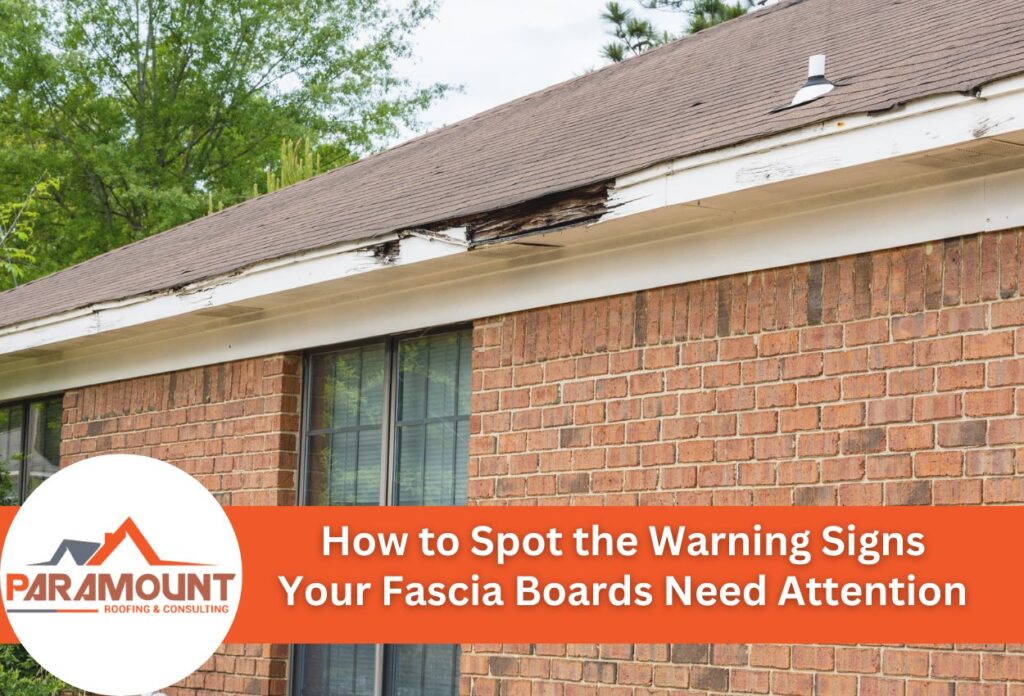
Key Points:
- Fascia boards often show damage through peeling paint, soft wood, sagging gutters, or water stains along the roofline.
- Ignoring fascia board problems can lead to bigger issues, including gutter failure, roof damage, and water getting inside the home.
- Catching fascia board damage early usually means easier, less expensive repairs instead of full board replacement.
Fascia boards are the protective barrier between the edge of your roof and the elements, playing an important role in maintaining your home’s structural integrity. These horizontal boards run along the roofline where gutters attach, shielding the roof decking and rafters from water damage and pest infiltration. When fascia boards begin to deteriorate, they can quickly lead to expensive repairs throughout your roofing system.
Recognizing the signs of damaged fascia boards early can prevent minor issues from becoming major headaches. Water damage along fascia boards often starts small but spreads rapidly, potentially affecting gutters, soffits, and even interior walls. Rotting fascia boards compromise the entire gutter system’s stability, leading to improper drainage and additional water problems.
Homeowners who catch fascia board problems in their early stages typically face simpler fascia board repair solutions rather than complete replacements. Understanding what to look for helps property owners take swift action before damage spreads to other areas of the home. Common warning signs include visible decay, paint peeling, water stains, and gutter problems that cause sagging or separation from the roofline.
Visual Clues That Point to Fascia Board Deterioration
Detecting problems with the fascia boards early begins with recognizing subtle visual changes that can be indications of leaks or structural damage. Discoloration appears as one of the first warning signs, often manifesting as dark streaks or water stains running down the fascia board surface. These stains typically develop where water consistently flows over or behind the boards, creating ideal conditions for rot to develop.
Paint peeling and bubbling along fascia boards are signs of leaks beneath the surface. This peeling often occurs in patches or strips, particularly around areas where gutters attach to the fascia board or where joints between boards create vulnerable entry points for water.
Structural changes become apparent as deterioration progresses beyond surface-level damage. Sagging fascia boards indicate the wood has lost its structural integrity, often due to prolonged exposure to moisture. Warping creates visible curves or bends in boards that should appear straight and level. When fascia boards begin pulling away from the house, this separation compromises the entire gutter system’s stability.
Fascia board problems often accompany these visual indicators, with gutters appearing loose, tilted, or separated from their mounting points. These structural compromises require immediate attention, as rotting fascia boards can lead to complete gutter failure and extensive water damage to surrounding areas.
Wood Rot and Decay Detection Methods
Identifying wood rot in fascia boards requires hands-on testing beyond visual inspection alone. The screwdriver test provides homeowners with a simple method to assess the wood’s structural integrity by gently pressing the tool’s tip against suspicious areas. Healthy wood will resist being pushed in, while rotted sections allow the screwdriver to sink in easily or create soft, spongy impressions. This technique works particularly well around gutter mounting points where water damage along the fascia board typically begins.
Understanding the difference between surface-level deterioration and deep structural rot is important for determining appropriate repair strategies. Surface damage typically affects only the outer wood layers and may respond well to cleaning, sanding, and repainting. However, deep rot compromises the wood’s structural integrity and requires immediate professional evaluation. When rotting fascia boards extend more than ¼ inch into the wood, fascia board replacement often becomes necessary rather than simple fascia board repair.
Water Damage Indicators Around Your Roofline
Water damage along rooflines creates distinctive patterns that reveal fascia board problems before structural damage becomes severe. Water stains typically appear as brown or yellowish discoloration running vertically down fascia board surfaces, indicating consistent moisture exposure from above. These stains often concentrate near downspout locations or gutter joints where water overflow occurs most frequently during heavy rainfall.
Mold growth is another indicator of excessive moisture around fascia boards. Black, green, or white patches developing on wood surfaces are signs that water has gone beyond the protective paint layer, creating the ideal conditions for fungal development. This biological growth accelerates wood deterioration and often indicates that rotting fascia boards require immediate attention to prevent further structural compromise.
Excessive moisture buildup manifests through persistent dampness around the roofline, even during dry weather conditions. This constant moisture exposure weakens wood fibers and compromises the fascia board’s ability to support gutter systems effectively. When moisture remains trapped against fascia board surfaces, it creates the perfect conditions for rapid decay.
Overflow marks appear as water-stained areas going beyond normal drainage patterns, indicating that gutters cannot handle water volume properly due to fascia board problems. Water pooling against fascia boards creates concentrated damage zones where deterioration accelerates quickly. These pooling issues often result from improper gutter slope, clogged drainage systems, or loose gutter attachments caused by compromised fascia board support.
Gutter-Related Problems That Affect Fascia Board Health
Gutter systems directly impact the fascia boards condition, as these components work together to manage water drainage along the roofline. When gutters develop problems, they create stress points and moisture issues that accelerate fascia board deterioration. Understanding this relationship helps homeowners recognize when gutter issues contribute to fascia board damage and require coordinated repair efforts.
Loose or sagging gutters place excessive weight on fascia board mounting points, creating structural stress that compromises wood integrity over time. This additional pressure often causes fascia boards to bow outward or separate from the house, particularly when combined with moisture exposure. Improperly attached gutters also create gaps where water can get behind the fascia boards, leading to hidden rot that spreads undetected until structural damage becomes severe.
Clogged gutters create overflow conditions that direct water directly against fascia board surfaces instead of away from the house. This constant water exposure saturates the wood and creates ideal conditions for rotting fascia boards. Poor drainage compounds these problems by allowing water to pool against the roofline, where it gets to the joints and mounting holes in the fascia board.
Gutter problems often develop gradually, starting with minor leaks or loose fasteners that get worse during storms and freeze-thaw cycles. Regular gutter maintenance prevents many issues that lead to water damage along the fascia board, while quick attention to loose mounting hardware prevents the structural stress that causes fascia board failure and requires extensive fascia board replacement projects.
When Fascia Board Damage Becomes a Serious Problem
Recognizing when fascia board deterioration transitions from a minor maintenance issue to a serious structural concern requires understanding how damage progresses throughout interconnected roofing components. When rotting fascia boards are compromised, they lose the ability to properly support gutter systems, creating a bunch of problems that can affect the entire roofing system.
Advanced fascia board deterioration shows up through several warning signs that require immediate professional intervention. Fascia boards pulling away from the house indicate that structural connections have failed, compromising the roof’s ability to shed water effectively. When gutters begin separating from their mounting points due to weak fascia board support, water runoff patterns change dramatically, directing moisture into areas never designed to handle such exposure.
The progression from surface-level damage to structural issues typically accelerates once water gets behind fascia boards. Hidden moisture infiltration spreads to the roof deck, soffit materials, and even interior wall systems before becoming visible to homeowners. This concealed water damage along the fascia board creates conditions where extensive fascia board replacement becomes necessary rather than localized repair work.
Professional evaluation becomes essential when multiple systems show interconnected problems. Signs that fascia board issues have escalated beyond simple maintenance include interior water stains, pest infiltration through compromised barriers, and gutter problems that affect multiple sections simultaneously. At this stage, addressing individual components without considering system-wide impacts often leads to recurring problems and incomplete solutions that require additional intervention.
Taking Action When You Find Fascia Board Damage
Discovering fascia board damage requires immediate assessment to determine the appropriate response and prevent additional deterioration. The extent of damage directly influences whether repairs can address the problem or if complete fascia board replacement becomes necessary. Homeowners should evaluate several factors when making this determination, including the depth of rot, the affected area’s size, and the structural integrity of surrounding components.
Minor surface damage often responds well to targeted fascia board repair approaches, particularly when caught early before moisture leaks deeply into the wooden structure. However, extensive rot typically requires complete removal and replacement to ensure long-term stability. Professional contractors can assess whether existing damage compromises the fascia board’s ability to support gutter systems and protect the underlying roof structure.
Immediate actions help prevent further deterioration while planning repair strategies. Homeowners should temporarily redirect water away from damaged areas by adjusting downspouts or installing temporary drainage solutions. Covering exposed wood with plastic sheets provides short-term protection during wet weather, and documenting damage through photographs can assist professional contractors in developing repair plans.
Addressing gutter problems simultaneously with fascia board repairs ensures coordinated solutions that prevent recurring issues. Water damage along the fascia board often stems from underlying drainage problems that require correction alongside board replacement or repair work. Taking swift action when damage appears prevents minor problems from escalating into extensive structural issues requiring major renovation projects.
Protect Your Home with Paramount Roofing & Consulting
If you’ve noticed any of the signs of damaged fascia boards mentioned above, such as rotting, water damage, or structural compromise, it’s important to take immediate action to protect your home. Delaying repairs can lead to more severe issues, including extensive structural damage that can be expensive to resolve. Paramount Roofing & Consulting specializes in fascia board repair and replacement, ensuring your home maintains its structural integrity and curb appeal.
Don’t wait until it’s too late. Call us today at (404) 971-2880 to schedule a consultation and let our experts provide you with the best solutions to preserve your home’s health. Remember, early detection and professional handling are key to avoiding major repairs. Trust Paramount Roofing & Consulting to restore your peace of mind with top-quality fascia board care.