(404) 971-2880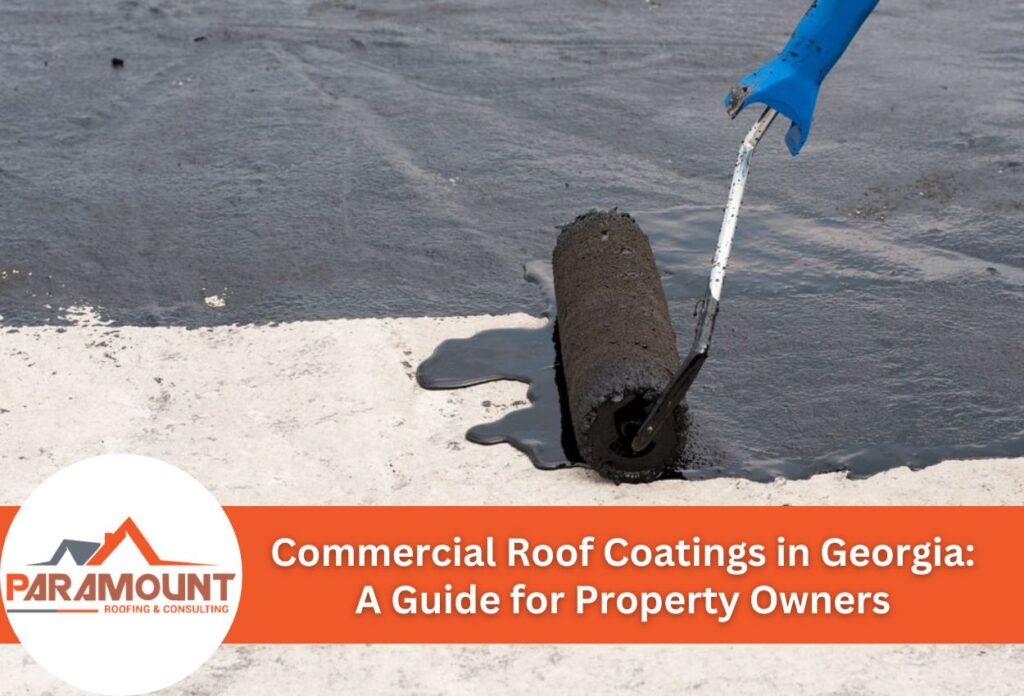

Commercial roof coatings are fluid-applied membrane systems that restore and protect existing roofs, extending their life by 10 to 20 years without a full tear-off or replacement. They bond directly to the existing surface, sealing seams, filling minor cracks, and creating a continuous waterproof barrier over the top of the current membrane.
Atlanta’s climate puts commercial roofs under serious stress year-round. Summer temperatures reach 90 degrees to 95 degrees Fahrenheit, annual rainfall totals 50 to 55 inches, and high humidity batters membranes month after month. That combination of intense UV exposure, heat, and moisture accelerates wear on low-slope and flat roofs far faster than in cooler, drier climates.
For warehouses, retail centers, medical facilities, and manufacturing plants across the Atlanta area, coatings offer a cost-efficient path forward when a roof is nearing the end of its warranty cycle but hasn’t reached active failure.
This guide covers coating types, costs, climate performance, how to choose a reputable contractor, and what Georgia property owners need to know about the 2025 Atlanta cool roof ordinance.
*Please note, price ranges listed in this article may not reflect the final cost of your project. Prices are subject to change based on various factors such as local labor rates, material quality, and more. All costs established in this article are rough estimates based on average industry rates.
Is Your Commercial Roof in Georgia Actually a Good Candidate for a Coating?
A roof qualifies for coating when it is structurally sound, drains properly, and has less than roughly 25% trapped moisture beneath the membrane. Anything beyond that threshold will cause the coating to fail prematurely. Before spending a dollar on materials or labor, work through the checklist below.
Green Light: Conditions That Make a Roof Ready for Coating
- Warranty nearing expiration, not already failed: Roofs approaching the end of their warranty cycle without active membrane failure are the strongest candidates. This is exactly the window where coating adds 10 to 20 years of service life at a fraction of the replacement cost.
- Roof deck compatibility confirmed: TPO, EPDM, modified bitumen, metal, built-up roofing, and SPF are all compatible with roof decks, provided the membrane is intact and adhered.
- Moisture below the danger threshold: An infrared thermography or nuclear isotope scan must confirm that saturated insulation covers less than roughly 25% of the total roof area.
- Functional drainage with minimal ponding: Water that drains within 48 hours of rainfall is acceptable. Water that sits for days signals a slope or drain problem that coatings cannot fix.
- No widespread blistering or delamination: Isolated seam issues can be addressed during prep; widespread surface failure cannot.
Red Flags: Conditions That Disqualify a Roof
- Active leaks from membrane failure: Seam leaks can often be repaired before coating, but leaks caused by membrane breakdown are a hard disqualifier.
- Trapped moisture confirmed by scan: Saturated insulation discovered during an infrared or nuclear scan means sections must be replaced before any coating is considered.
- Sagging roof decking or compromised structure: No coating system can compensate for a structurally weakened roof deck; replacement is the only path forward.
- Drainage deficiencies that cannot be corrected: If slope problems cannot be resolved during prep work, ponding water will destroy the coating within 1 to 2 seasons.
A moisture survey, either infrared thermography or a nuclear isotope scan, is a non-negotiable first step before any coating decision is made. Many Atlanta commercial roofs approaching end-of-warranty life without active failure pass this checklist easily, making them strong candidates for coating rather than full replacement. A commercial roof inspection by a qualified contractor is the right starting point to confirm candidacy before any other decisions are made.
What Types of Commercial Roof Coatings Are Available in Georgia?
Four primary coating chemistries are used on commercial roofs in Georgia: acrylic elastomeric, silicone, polyurethane, and hybrid blends, and each performs differently depending on the type of roof deck present, the drainage conditions, and UV exposure. The table below compares them directly so property owners can match the right product to their roof’s actual conditions.
| Coating Type | Best Roof Deck Match | Georgia Climate Performance | Typical Lifespan | Ponding Water Resistance | Relative Cost | Key Trade-off |
|---|---|---|---|---|---|---|
| Acrylic Elastomeric | Metal, modified bitumen, built-up roofing | Strong UV and heat reflection; struggles in high-moisture zones | 10 to 15 years | Low loses film thickness in standing water | $0.15 to $0.35 per sq ft (materials) | Easy to recoat; poor choice for drainage-limited roofs |
| Silicone | TPO, EPDM, SPF, built-up roofing | Excellent UV and ponding resistance; handles 50+ inches of annual rainfall well | 15 to 20 years | High does not absorb water or degrade under standing water | $0.25 to $0.50 per sq ft (materials) | Slippery surface; future recoats require full cleaning and adhesion prep |
| Polyurethane Aliphatic | Metal, SPF, high-traffic decks | Excellent UV stability; resists yellowing and surface degradation | 10 to 15 years | Moderate performs better than acrylic but below silicone | $0.40 to $0.70 per sq ft (materials) | Higher material costs; best used as a topcoat over aromatic base |
| Polyurethane Aromatic | SPF, concrete, high-impact surfaces | High impact resistance; UV exposure causes yellowing without an aliphatic topcoat | 8 to 12 years (as base coat) | Moderate | $0.30 to $0.55 per sq ft (materials) | Must be paired with aliphatic topcoat for UV protection |
| Hybrid / Elastomeric Blends | TPO, EPDM, modified bitumen, metal | Balanced UV, flexibility, and moisture performance across Georgia seasons | 12 to 18 years | Moderate to high depending on formulation | $0.25 to $0.45 per sq ft (materials) | Performance varies by product; verify elongation and ponding ratings before specifying. |
One term causes consistent confusion among property owners: “elastomeric.” Elastomeric is not a coating type on its own; it is a performance descriptor, meaning the coating stretches and returns to its original shape under temperature changes. Acrylic, silicone, polyurethane, and hybrid products can all be elastomeric if they meet the elongation threshold, typically 100% or greater.
In Georgia’s combination of heavy rainfall and high UV exposure, silicone outperforms acrylic on roofs with any drainage limitations. It will not break down under standing water the way acrylic film will. Acrylic remains the better call for well-drained metal or built-up roofs where recoating ease and lower material costs matter most. For roofs in Atlanta with slope problems or slow-draining areas, silicone is the safer long-term investment even at a higher upfront material cost.
How Does Georgia’s Climate Affect Commercial Roof Coating Performance?
Georgia’s climate creates four distinct stressors that directly determine which coating a commercial roof needs and how long it will last. Dark membranes in Atlanta can reach 140 degrees to 160 degrees on summer afternoons, and a quality reflective coating can reduce that surface temperature by up to 50 degrees, cutting heat-driven membrane degradation significantly faster than in cooler climates would.
| Climate Stressor | What It Does to the Roof | Recommended Coating Response |
|---|---|---|
| UV intensity and heat (surface temps 140 degrees to 160 degrees) | Accelerates membrane oxidation, brittleness, and seam failure | High-reflectivity silicone or white acrylic; coatings that reduce surface temps by up to 50 degrees |
| Annual rainfall of 50 to 55 inches with heavy downpours | Creates ponding on low-slope roofs; degrades acrylic film under standing water | Silicone coating does not absorb water or break down under prolonged standing water |
| Winter temperature changes (40 degrees to 50 degrees range) | Causes membrane expansion and contraction, leading to cracking and seam stress | High-elongation elastomeric products that flex without splitting |
| High summer humidity (regularly approaching 85%) | Slows cure time, traps moisture at the roof deck’s interface, and reduces adhesion | Strict surface prep; application only within the May through October window when humidity and temperatures align |
Each stressor pulls in a slightly different direction. UV and heat favor light-colored, high-reflectance products. Heavy rainfall and drainage limitations favor silicone’s standing-water tolerance. Winter temperature changes favor elastomeric products with enough stretch to handle membrane movement. Humidity management is less about product choice and more about scheduling coating over a surface with high ambient moisture, which will cause adhesion failure regardless of chemistry.
Atlanta’s May through October application window aligns almost exactly with the cooling season, meaning reflective coatings installed in that window begin reducing energy costs from day one and continue doing so across Georgia’s long stretch of hot weather. For commercial property owners, that makes a coating investment both a roof protection decision and an energy cost management decision, with two returns from a single project.
What Does the Atlanta Cool Roof Ordinance Mean for Commercial Property Owners?
Atlanta’s 2025 Cool Roof Ordinance sets a minimum Solar Reflective Index of 85 for low-slope commercial roofs, the flat and near-flat roof types covering most warehouses, retail centers, and medical facilities across the city. That SRI ≥ 85 threshold also requires an aged solar reflectance of 0.70 or higher, meaning the roof must still reflect at least 70% of solar energy after years of real-world exposure, not just when freshly installed. Standard-slope roofs face a lower bar: SRI ≥ 20, but most commercial property owners in Atlanta are dealing with low-slope systems, so the stricter standard is the one that matters most for this market.
Who the Ordinance Applies To and Who Gets a Pass
The ordinance covers new construction and full roof replacements on nearly all residential and commercial buildings in Atlanta. It does not apply to green roofs, rooftop recreation areas, or any roof section covering 3% or less of the building’s total floor area. Roof coating projects applied over an existing membrane without a full tear-off and replacement may not trigger the ordinance at all, but property owners should confirm that directly with Atlanta’s permitting authority before assuming an exemption applies to their project.
Compliance Timeline and What Contractors Must Provide
Enforcement begins 365 days after state approval of the ordinance. Within the first 180 days, Atlanta’s permitting systems will be updated to require SRI documentation at the time of permit submission. In practical terms, contractors must supply product data sheets showing that materials meet the aged SRI and solar reflectance thresholds before a permit is issued, not after the job is finished.
For commercial property owners weighing a coating project, this timeline creates an opening rather than an obstacle. Most premium silicone and acrylic coating systems already meet or exceed SRI ≥ 85 when applied at the manufacturer-specified mil thickness. A coating project that extends roof life by 10 to 20 years and meets the city’s reflectance standard achieves two goals: code compliance and long-term energy savings from a single installation. The compliance requirement and the performance goal point in the same direction, making reflective coatings a straightforward answer to both.
How Much Do Commercial Roof Coatings Cost Per Square Foot in Georgia?
Commercial roof coatings in Georgia typically run $1.50 to $4.50 per square foot installed, a fraction of the $7 to $14+ per square foot cost for full roof replacement on the same building. That gap is where the value argument for coatings lives, and understanding what drives a project toward either end of that range helps property owners budget accurately before requesting quotes.
| Coating Type | Low-End Cost/SF | High-End Cost/SF | Average Project Size Impact | Typical Warranty Length | Est. Cost to Extend Life by 1 Year |
|---|---|---|---|---|---|
| Acrylic | $1.50 | $2.50 | Low economies of scale below 10,000 SF | 10 to 15 years | $0.10 to $0.25/SF |
| Silicone | $2.00 | $3.50 | Mobilization costs affect small roofs the most | 15 to 20 years | $0.10 to $0.23/SF |
| Polyurethane Aromatic Base | $2.25 | $3.75 | Multi-coat systems increase labor costs | 8 to 12 years (as base coat) | $0.19 to $0.47/SF |
| Polyurethane Aliphatic Topcoat | $2.75 | $4.50 | High-traffic or metal roofs drive the job scale up | 10 to 15 years | $0.18 to $0.45/SF |
| Hybrid / Elastomeric Blends | $2.00 | $3.75 | Varies by system complexity and roof deck | 12 to 18 years | $0.11 to $0.31/SF |
Several factors push a project toward the higher end of the $1.50 to $4.50 range. Roofs under 10,000 square feet carry the same contractor mobilization costs as larger jobs, so the per-square-foot math works against smaller properties. Extensive roof deck repairs, removal of a failed existing coating layer, access restrictions on multi-story buildings, and premium two-coat silicone systems with embedded fabric reinforcement at seams all add cost before the first gallon is applied.
When comparing quotes, ensure each contractor specifies the same mil thickness, number of coats, and warranty terms; otherwise, the numbers are not comparable, and the lowest bid may deliver the least material. Collect at least 3 quotes per project. A quote missing those details leaves property owners comparing different products at the same price, which is not an apples-to-apples decision. The cost-per-year-of-life column in the table above is calculated by dividing the total installed cost per square foot by the expected lifespan in years, providing a more honest comparison tool than headline cost per square foot alone.
How Long Do Commercial Roof Coatings Last in Georgia’s Climate?
Commercial roof coatings in Georgia typically last 10 to 20 years, with acrylic and silicone systems averaging 10 to 15 years and polyurethane or premium elastomeric systems reaching closer to 20 years when applied correctly and maintained on schedule. That range is wide because two variables in Georgia’s environment have more influence over lifespan than the coating chemistry itself.
The first variable is application quality. Coating over a surface with trapped moisture or applying during high-humidity conditions causes adhesion failure; the coating separates from the membrane before it ever reaches its rated life. The second variable is maintenance. Most coatings require inspection and minor recoating of worn areas, especially seams and high-foot-traffic zones, every 5 to 7 years to reach the upper end of their rated lifespan. Skip that interval, and a 20-year system may perform more like a 12-year one.
| Coating Type | Expected Lifespan (Georgia) | Maintenance Interval | Recoatable? | Manufacturer Warranty Range |
|---|---|---|---|---|
| Acrylic | 10 to 15 years | Every 5 to 7 years | Yes | 10 to 15 years |
| Silicone | 15 to 20 years | Every 5 to 7 years | Yes, with a compatible primer | 15 to 20 years |
| Polyurethane Aromatic Base | 8 to 12 years as a base coat | Every 5 years | Yes requires topcoat | 8 to 12 years |
| Polyurethane Aliphatic Topcoat | 10 to 15 years | Every 5 to 7 years | Yes | 10 to 15 years |
| Hybrid / Elastomeric Blends | 12 to 18 years | Every 5 to 7 years | Yes | 12 to 18 years |
Silicone holds the strongest case for Georgia roofs specifically because it does not break down under standing water, a direct answer to Atlanta’s 50 to 55 inches of annual rainfall and the ponding risk that comes with low-slope roofs. Acrylic costs less upfront but degrades faster under prolonged standing water, making it better suited to roofs with solid drainage.
The lifespan numbers above assume proper surface prep, application within the May through October window, and a scheduled maintenance program. Routine maintenance, including seam inspections and spot recoating, is its own topic worth reviewing before any coating project begins, since skipping it is the single most common reason coatings underperform their rated life. A structured commercial roof maintenance program is the most reliable way to reach the upper end of a coating’s rated lifespan.
What Is the Best Application Window for Commercial Roof Coatings in Atlanta?
May through October is Atlanta’s primary application season for commercial roof coatings, when daylight hours and temperatures consistently stay between 50 degrees and 100 degrees and dry weather patterns support the 48 to 72-hour post-application window during which coatings need to cure properly. That combination of temperature range, manageable humidity below 85%, and reliable stretches of dry weather makes mid-spring through early fall the safest, most predictable time to schedule a coating project on any commercial roof in the city.
Why the Off-Season Creates Real Problems
November through April introduces conditions that work against proper adhesion. Temperatures can drop below the 50-degree minimum threshold, especially overnight, and Atlanta’s winter dew point swings increase condensation risk on roof membranes even when midday conditions look acceptable. Shorter daylight windows also reduce the productive application hours per day on large commercial roofs, a factor that matters when a warehouse or retail center has 20,000 or more square feet to cover in a single mobilization.
Some solvent-based polyurethane coatings carry wider temperature tolerances and may perform in cooler conditions. That flexibility should always be verified against the product data sheet and confirmed with a qualified contractor, never assumed. Off-season application on the wrong product can void a manufacturer’s warranty before the coating sees its first summer.
Planning Around Peak-Season Demand
Qualified Atlanta contractors book out 4 to 8 weeks in advance during the summer. A property owner targeting a May or June application needs to start the inspection and quote process in February or March to avoid being pushed into late summer when afternoon thunderstorms become more frequent and scheduling dry windows gets harder. Beginning the infrared moisture survey and contractor comparison in early spring keeps options open and avoids the rushed decisions that come with last-minute scheduling.
How Does a Commercial Roof Coating Project Work From Start to Finish?
A commercial roof coating project follows 9 defined steps from initial inspection through warranty registration and typically takes 3 to 7 days on-site for a mid-size commercial roof, not counting the inspection and contractor selection phase that should happen weeks before work begins. Understanding the full sequence helps property owners set realistic expectations and catch contractors who skip steps that directly affect how long the coating lasts.
- Initial roof inspection and condition assessment: A qualified inspector evaluates the existing membrane, drainage, flashing, and seams to confirm the roof is a coating candidate. Roofs with active leaks, widespread membrane failure, or structural deck damage are not suitable coating over those conditions accelerates failure rather than preventing it.
- Moisture survey (infrared or nuclear scan): Infrared or nuclear scanning identifies wet insulation beneath the membrane. Coating over trapped moisture causes adhesion failure and can void the manufacturer’s warranty. This step should always happen before any prep work begins.
- Contractor selection and proposal review: Collect at least 3 proposals and confirm each one specifies mil thickness, number of coats, coating system, and warranty terms. Proposals missing those details are not comparable, regardless of cost per square foot.
- Roof deck preparation, cleaning, repair, and primer application: This phase is the single most important determinant of coating longevity, and low-bid contractors who rush or skip it produce the majority of premature coating failures seen on Georgia commercial roofs. Prep and cleaning typically represent 30% to 40% of total project labor. Expect power washing, mechanical scrubbing, seam repairs, crack filling, and priming of problem areas before any coating touches the roof.
- Base coat application: The first coat is applied at the manufacturer-specified mil thickness. Application rate is controlled carefully; too thin reduces performance; too thick extends cure time and can cause skinning.
- Reinforcing fabric at seams, gaps, and transitions: Polyester or fiberglass fabric is embedded into wet coating at seams, pipe gaps, curbs, and transitions where movement stress concentrates. This step is required on most systems and is commonly omitted by low-cost contractors.
- Topcoat application: The finish coat is applied after the base coat cures. Cure time between coats runs 24 to 72 hours, depending on temperature and humidity. Atlanta’s summer humidity can push that toward the longer end of that range.
- Final inspection and mil thickness verification: A wet-film or dry-film gauge confirms the applied coating meets the minimum mil thickness specified in the proposal and required by the manufacturer for warranty eligibility.
- Warranty registration: Most manufacturer warranties require the contractor to register the project within 30 to 90 days of completion. Property owners should request a copy of the registration confirmation, not just the warranty document, before final payment is made.
Atlanta commercial property owners should also confirm with their contractor whether the project scale triggers local permitting requirements before work begins. Some jurisdictions distinguish between maintenance coatings and restoration systems, and the permitting threshold can vary by building type and coating scale. Asking that question early prevents delays once the crew is already scheduled.
Silicone vs. Acrylic vs. Elastomeric: Which Commercial Roof Coating Is Right for Your Georgia Property?
The types of roof deck and drainage condition, not brand preference, should drive every coating selection decision, and a site assessment by a qualified contractor is the only way to confirm which system fits a specific roof. Each coating category has a clear use case, and each also has a disqualifier that matters on Georgia commercial roofs.
- Choose silicone if your roof has drainage issues or recurring ponding: Silicone does not degrade under standing water, maintains flexibility through Atlanta’s wide temperature swings, and meets the Solar Reflectance Index thresholds required under Atlanta’s Cool Roof Ordinance. With a lifespan of 15 to 20 years, it carries the strongest performance case for low-slope roofs in high-rainfall Georgia markets. The disqualifier: silicone surfaces become slippery when wet, making it a safety concern on any roof with regular foot traffic from maintenance crews or mechanical technicians.
- Choose acrylic elastomeric if your roof drains well and budget is a factor: Acrylic costs less upfront than silicone, offers a lifespan of 10 to 15 years on well-drained surfaces, and is the easiest coating system to recoat and repair over time. The disqualifier: acrylic loses film thickness in standing water zones, so any roof with even moderate ponding will see faster degradation and a shorter service life than the rated range suggests.
- Choose polyurethane or a hybrid elastomeric if your roof sees heavy foot traffic or thermal movement: Polyurethane systems, particularly aromatic base coats paired with aliphatic topcoats, handle mechanical equipment vibration, foot traffic stress, and the thermal expansion common on metal roofs better than silicone or acrylic alone. Hybrid and elastomeric blends can reach 12 to 18 years under Georgia conditions. The disqualifier: polyurethane costs more upfront, and aromatic base coats require a UV-stable aliphatic topcoat to prevent chalking; skipping that topcoat degrades appearance and shortens service life.
No coating category performs well when applied to the wrong roof deck or over poor drainage. The site condition always determines the system, not the other way around. A qualified contractor should conduct a full inspection and moisture survey before any product is specified for a Georgia commercial roof.
What Are the Energy Savings and ROI of Commercial Roof Coatings in Georgia?
Reflective roof coatings can reduce roof surface temperatures by up to 50 degrees during Georgia’s summer, which directly cuts the heat pushing into a building and reduces the HVAC usage across a cooling season that typically runs 6 to 7 months in Atlanta. Studies on cool roof performance in hot-humid climates show cooling energy consumption can drop by 10% to 25% after a reflective coating is applied. That energy reduction adds up over time, and when stacked against the full cost of roof replacement, the financial case becomes hard to ignore.
| ROI Factor | 20,000 SF Atlanta Warehouse Scenario |
|---|---|
| Coating cost at $1.50 to $4.50/SF | $30,000 to $90,000 total |
| Full replacement cost deferred at $7 to $14+/SF | $140,000 to $280,000+ avoided |
| Estimated annual cooling energy savings (10% to 25%) | Varies by HVAC usage; often $3,000 to $8,000/year for a building this size |
| Estimated payback period | 3 to 7 years, depending on energy costs and coating system selected |
| Cumulative savings over the 15-year coating lifespan | $45,000 to $120,000+ in energy savings alone, plus replacement deferral value |
| Avoided business disruption vs. full replacement | Coating projects typically finish in 3 to 7 days; full tear-offs run for weeks and often require operational shutdowns |
The replacement deferral value alone, $140,000 to $280,000+ on a 20,000 SF roof, typically dwarfs the total coating investment several times over. Some coating projects may also qualify for utility rebates through Georgia Power or other programs, and ENERGY STAR-rated coating products may qualify for federal energy efficiency tax incentives. Property owners should consult a tax advisor and their contractor to confirm current eligibility before the project begins.
How Do You Find and Evaluate the Best Commercial Roof Coating Contractors in Georgia?
The fastest way to screen commercial roof coating contractors in Georgia is to check for four non-negotiable qualifications before reading a single proposal. A contractor must hold a Georgia State Roofing Contractor license (or a General Contractor license with documented roofing scale), carry commercial general liability insurance at $1M or more per occurrence, carry workers’ compensation insurance, and hold approved applicator status from the coating manufacturer whose product they are proposing; without that manufacturer’s approval, no manufacturer-backed warranty can be issued.
Red Flags That Disqualify a Contractor Regardless of Cost
- No moisture survey offered or recommended: Any contractor who quotes a coating job without first recommending an infrared or nuclear moisture scan is skipping the step that determines whether coating will work at all.
- Thickness measured in gallons per square, not dry mils: Proposals that specify coverage in gallons per square cannot be verified after installation. Every compliant proposal must state mil thickness per coat and total dry film thickness.
- No manufacturer-backed warranty documentation: A contractor-only warranty does not protect if the business closes. Manufacturer backing is the standard on qualified projects.
- No local commercial references in the Atlanta metro area: Experience on commercial roof decks, TPO, EPDM, modified bitumen, and metal in Georgia’s climate is not the same as general roofing experience.
What Every Proposal Should Include
- Coating product data sheet showing the Solar Reflectance Index value required for Atlanta Cool Roof Ordinance compliance on low-slope commercial roofs (SRI ≥ 85)
- The scale of roof deck repairs is included before coating begins
- Mil thickness per coat and total dry film thickness
- Warranty term with clear identification of who backs it, the manufacturer or contractor only
- Scheduled application window and a weather contingency plan covering the 24 to 72-hour cure period after each coat
Collect at least 3 proposals and reject any that are missing mil thickness, warranty source, or SRI documentation. Those gaps make cost comparisons meaningless and put the project at risk before work begins. Paramount Roofing & Consulting provides fully documented proposals that meet all of these standards for Atlanta commercial properties.
What Money-Saving Strategies Should Georgia Property Owners Know Before Signing a Roof Coating Contract?
Acting before a roof fails is the single most effective way to reduce commercial roof coating costs. Coatings applied to roofs in sound condition cost less per square foot and last longer than those applied as emergency interventions after leaks or membrane damage appear.
- Coat before failure, not after: A roof in good condition accepts coating products properly and allows full cure at the rated mil thickness. Once a roof reaches active failure, repair costs add to the coating costs, and the window for a standard coating system may close entirely, forcing a full replacement at $7 to $14+ per square foot instead.
- Bundle multiple buildings or roof sections into one contract: Contractor mobilization equipment, crew travel, and setup are fixed costs spread across the job. Bundling two or more buildings or roof sections under a single contract reduces the per-square-foot rate because that fixed cost covers more area. Ask for a line-item breakdown so the savings are visible.
- Schedule in early May or late September: Peak demand for commercial roofing crews in Atlanta runs from mid-June through August. Scheduling outside that window, early May or late September, can improve contractor availability and may open room for better pricing on labor and materials.
- Request a maintenance rider in the contract: Some manufacturers extend warranty terms from 10 years to 15 or 20 years in exchange for documented annual inspections. That rider costs far less than a new warranty cycle and must be negotiated at contract signing, not after the job closes.
- Verify coating mil thickness with an independent inspector at project completion: Underapplication is the most common way property owners do not receive what they paid for. A contractor who applies 20 dry mils of silicone correctly will outperform one who applies 12 mils incorrectly at half the cost, and the failure costs, including recoating, interior damage, and business disruption, far exceed any upfront savings.
- Negotiate warranty transfer provisions before signing: If the property may be sold within the coating’s life cycle, a manufacturer-backed, transferable warranty adds measurable value to the asset. That provision must be written into the contract at the start; it cannot be added retroactively after the manufacturer registers the project.
The cheapest quote rarely represents the best value in commercial roof coatings. Cost comparisons are only meaningful when every proposal states the same dry mil thickness, warranty source, and roof deck scale. Evaluate proposals on those terms first, then compare costs. When a roof reaches active failure before a coating can be applied, commercial roof repair is the necessary first step before any coating system can be considered.
Ready to Protect Your Georgia Commercial Roof? Here’s How to Get Started
Atlanta property owners who act before their roof reaches active failure have the most options and the lowest costs. A coating applied to a sound roof runs $1.50 to $4.50 per square foot, versus $7 to $14+ per square foot for a commercial roof replacement that could have been deferred by 10 to 20 years.
Paramount Roofing & Consulting works with commercial property owners across the Atlanta area to assess roof condition, confirm Cool Roof Ordinance compliance, and recommend the right coating system for Georgia’s climate before an emergency forces a costlier decision.
Schedule your free roof assessment.
Not ready to schedule? Learn more about commercial roof coatings for Georgia properties.
Frequently Asked Questions
Got questions about your roof? We’ve got answers. From maintenance tips to insurance claims and repair timelines, our FAQ section covers the most common concerns homeowners have. Get informed and make confident decisions about protecting your home.
People Also Ask
Can a commercial roof coating be applied over an existing failed coating layer in Georgia?
A failed or delaminating coating layer must be fully removed before a new system is applied. Bonding over compromised material transfers the failure point to the new coating. In Georgia’s heat and humidity, adhesion to a contaminated surface degrades even faster, shortening the new system’s lifespan significantly.
Do Georgia commercial roof coatings require any special permits outside of Atlanta city limits?
Permitting requirements vary by county and municipality across Georgia. Fulton, Gwinnett, and Cobb counties each have their own building departments with different thresholds for when a restoration coating triggers a permit versus routine maintenance. Property owners should confirm scale classification with their local jurisdiction before work begins, as requirements outside Atlanta city limits are not governed by the 2025 Cool Roof Ordinance.
How does Georgia's humid climate affect how long a coating takes to fully cure compared to drier states?
Atlanta’s humidity regularly approaches 85% during summer mornings, slowing solvent evaporation and moisture vapor transmission through water-based coatings like acrylics, pushing cure windows toward the longer end of the 48- to 72-hour range. Contractors in Georgia must monitor dew point, not just air temperature, to avoid flash-cure failures that appear sound but lose adhesion within the first wet season.
Related Articles
-
 August 19, 2026Commercial Roofing Services in Douglasville, GA: What Business Owners Need to KnowExplore commercial roofing systems, costs, contractor tips, and maintenance to protect your building.
 -
 December 3, 2025When Should a Commercial Roof Be Recoated for Maximum Protection?Commercial roofs endure constant exposure to weather that gradually breaks down protective coatings and compromises structural integrity. Understanding when to recoat a commercial roof prevents emergency repairs and extends the roofing system’s operational lifespan. Property owners who master proper timing for commercial roof recoating save on premature replacement costs. Most commercial roofing systems require recoating […]
 -
 November 13, 2025What to Look for During a TPO Roof Inspection: A GuideNeed a TPO roof inspection? Learn to spot warning signs like seam failures and surface damage to avoid costly repairs.
Protect Your Home with Expert Roofing
Don’t wait for leaks or storm damage to cause costly repairs. Our experienced roofing team provides fast, reliable service, high-quality materials, and lasting results. Ensure your home stays safe, secure, and looking great—contact us today for a free estimate.