(404) 971-2880
Commercial Roofing Services in Douglasville, GA: What Business Owners Need to Know
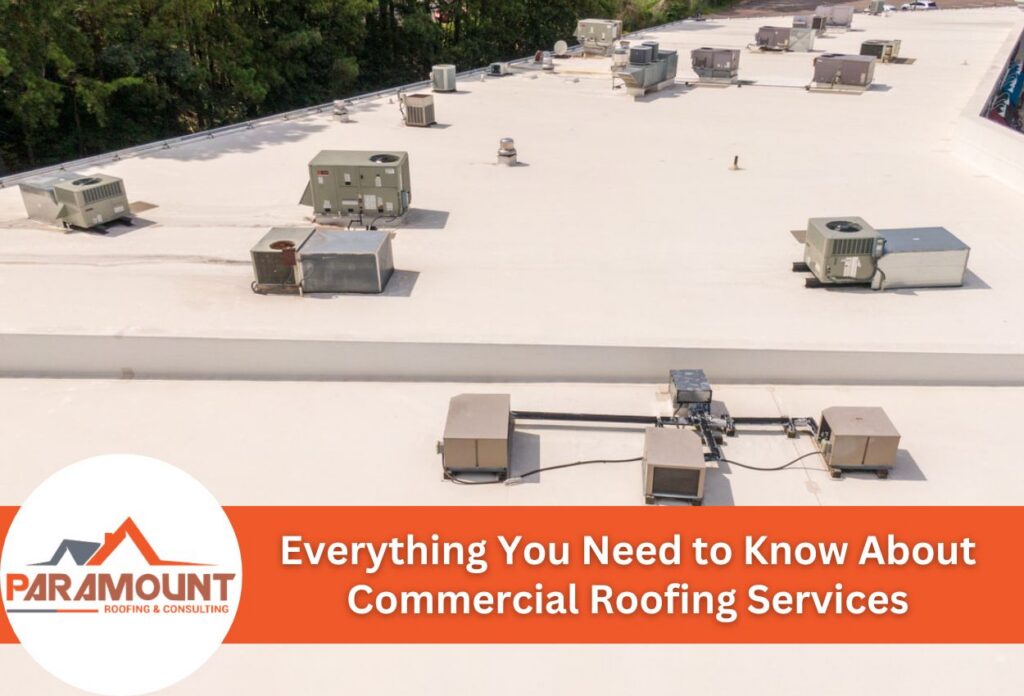

Commercial roofing services cover the full range of work a business building needs to stay protected, from routine inspections and maintenance to leak repairs, full replacements, and new roof installations. Commercial work involves large surface areas, materials such as TPO, EPDM, PVC, and metal, and strict permit and code requirements enforced by local jurisdictions like Douglas County.
In Douglasville and the broader West Atlanta metro area, these services carry extra weight. Summer surface temperatures on low-slope commercial roofs can climb well above the already-hot ambient highs in the upper 80s to low 90s. With roughly 53 inches of annual rainfall, high humidity from late spring through early fall, and a real risk of hail and severe storms, a poorly maintained commercial roof becomes a fast and expensive problem for any property owner or manager.
What Types of Commercial Roofing Systems Are Available and Which Is Right for Your Building?
For most commercial buildings in Douglasville and the West Atlanta metro area, a single-ply membrane system, such as TPO, PVC, or EPDM, is the most common fit. Low-slope and flat roof designs dominate the local commercial buildings across office, retail, warehouse, church, school, and light industrial properties. Membrane systems install directly over low-slope roof decks and handle the heavy rain, high UV, and summer heat this region delivers year after year. Built-up roofs and modified bitumen are older but still widely used options, especially on reroofing projects for late 20th-century and early 21st-century buildings. Metal roofs are another option, typically found on newer construction or buildings with steeper slopes.
| System Type | Best Application | Energy Efficiency | Typical Lifespan | Georgia Climate Suitability |
|---|---|---|---|---|
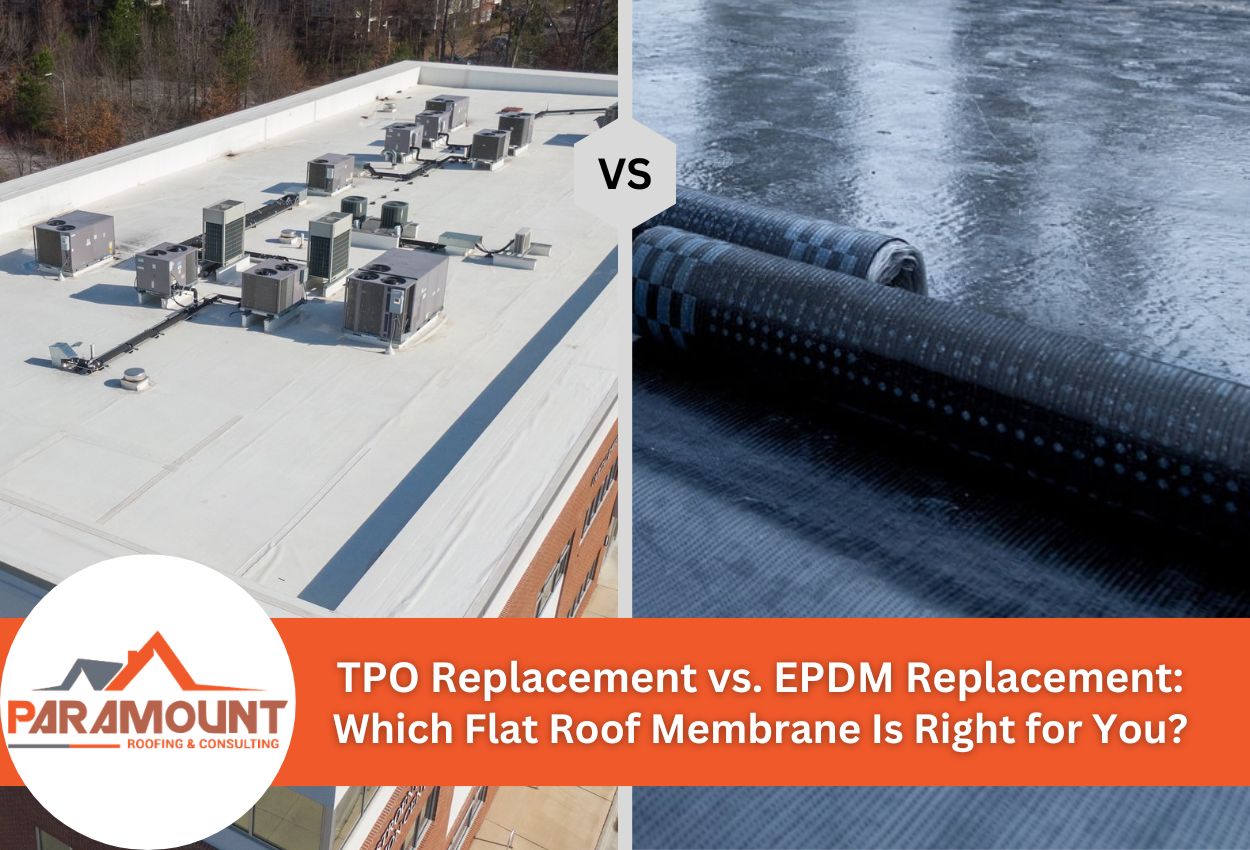
| TPO | Low-slope roofs on retail, warehouses, schools | High; white membrane reflects UV and heat | 20 to 30 years | Excellent; strong heat reflectivity, resists moisture |
| PVC | Restaurants, kitchens, factories | High; highly reflective white surface | 20 to 30 years | Very good; resistant to chemicals, handles heavy rain well |
| EPDM | Low-slope commercial and light industrial | Moderate; dark membrane absorbs heat unless coated | 20 to 30 years | Good; durable under storm exposure, but may need reflective coating in summer heat |
| Metal Roof | Newer construction, steeper commercial slopes | High; coated panels reflect radiant heat | 40 to 70 years | Excellent; handles hail, heavy rain, and high winds well |
| Built-Up Roof | Flat roofs on older commercial buildings | Low to moderate; gravel surface retains heat | 15 to 30 years | Good; multiple layers add waterproofing for heavy rain |
| Modified Bitumen | Reroofing on older flat-roof commercial buildings | Moderate; reflective cap sheets available | 20 to 30 years | Good; flexible under temperature changes, strong seams |
TPO stands out in this area because its white membrane directly addresses two of the biggest local threats: high surface temperatures and near-constant UV exposure in summer. For most low-slope commercial buildings in Douglasville, TPO delivers the best combination of heat reflectivity, waterproofing, and lifespan for the costs involved.
What Are the Signs Your Commercial Roof Needs Repair or Replacement?
Commercial roof problems often go undetected for months or sometimes years. Large building footprints, limited roof access, and the complex drainage systems of low-slope designs make it easy to miss early warning signs until interior damage or escalating repair costs force the issue. Catching problems early can mean the difference between a few hundred dollars in repairs and a full replacement project. Here are the most important signs to watch for on any commercial property in the Douglasville area.
- Interior leaks or water stains on ceilings or walls: Any staining, dripping, or wet insulation inside a building points to an active leak. In Douglasville, where roughly 53 inches of rain falls annually, even a small vulnerability in your roof can allow repeated water entry before it becomes visible inside.
- Ponding water that remains 48 hours or longer after rainfall: Ponding that does not drain within 48 hours is one of the most common and damaging issues on flat and low-slope commercial roofs in this market. Heavy rainstorms hit Douglasville regularly through spring and summer, and standing water accelerates membrane breakdown and adds structural weight over time.
- Membrane blistering or bubbling on the roof: Blisters form when heat and moisture get trapped beneath single-ply or built-up roof layers. Summer surface temperatures on low-slope commercial roofs in this region regularly push well beyond the ambient highs in the upper 80s to low 90s, making blistering a frequent problem.
- Flashing failures around HVAC units, vents, or openings: Gaps, rust, or lifted flashing at any roof opening create direct water entry points. HVAC equipment is common on commercial rooftops, and flashing at those connections takes repeated stress from temperature changes and strong storms.
- Membrane seam separation or visible tears: Strong winds and hailstorms, both real risks in Douglas County, can lift, split, or separate membrane seams. Even small tears allow water to reach the roof deck quickly during heavy rain.
- Sagging or soft spots in the roof deck: Any area that is sagging or shows visible indentations signals saturated insulation or structural damage beneath the membrane. This level of deterioration typically means the damage has been building for a long time.
- Surface degradation or significant granule loss on modified bitumen or built-up roofs: On older commercial buildings, especially those built in the late 20th century and early 21st century, surface layer breakdown exposes underlying materials to UV and moisture damage year-round.
Isolated issues like a failed flashing or a single seam tear typically point toward repair. Widespread membrane damage, multiple leaks across the roof, ponding in several zones, or roof deck deterioration are signs that replacement is the more cost-effective path long-term. A professional commercial roof inspection is the most reliable way to determine which situation applies.
How Much Do Commercial Roofing Services Cost?
Commercial roofing costs in the Georgia market range from a few hundred dollars for a basic inspection to thousands of dollars for a full system replacement. The final number shifts based on the size of the roof, system type, tear-off requirements, number of HVAC openings, and the warranty tier selected. Most commercial property owners are surprised by how wide that range runs. A 20,000-square-foot warehouse replacement is a very different project from patching a single flashing failure on a small retail suite. Understanding where your building falls in that range before work starts is the best way to avoid budget surprises and make a sound decision.
| Service Type | Typical Cost Range(10,000 Sq. Ft. Commercial Roof) | What It Includes | Key Pricing Factors |
|---|---|---|---|
| Inspection | $400 to $900 | Visual and physical assessments, drainage reviews, written condition reports | Roof size, roof accessibility, number of roof openings |
| Minor Repair | $300 to $1,500 | Seam patches, flashing repairs, isolated membrane fixes | Repair location, material matching, labor access |
| Major Repair | $1,500 to $8,000 | Multi-zone leak repairs, roof deck section replacements, extensive flashing replacements | Extent of roof deck damage, number of roof openings, permit requirements |
| Partial Re-Cover | $35,000 to $90,000 | New membrane installations over qualifying sections, tapered insulation additions | Existing system condition, insulation requirements, code compliance |
| Full Replacement | $90,000 to $150,000+ | Complete tear-offs, new insulation and membrane installations, updated flashings, permits, warranties | Roof size, system type (TPO, EPDM, PVC, metal), tear-off layers, warranty tiers |
| Preventive Maintenance Plan | $500 to $2,500 | Biannual inspections, minor repairs, drain clearing, condition reporting | Roof size, system type, repair inclusions, contract length |
Several variables push costs toward the higher end of any range. Larger roofs increase both material and labor costs directly. Buildings with many HVAC units, vents, or other openings require more flashing work at every access point. Tear-off adds cost when local permit requirements or existing roof deck damage makes a re-cover option unavailable. Code-compliance upgrades, such as updated insulation R-values required under current Douglas County permit requirements, add cost but are not optional once a permit is pulled.
A delayed minor repair can turn into an expensive roof deck replacement if water keeps entering the roof through the same damaged area. Choosing a contractor without checking their credentials, licensing, and insurance often leads to a second round of costs to fix work that failed. The total cost over a building’s life cycle almost always favors well-vetted contractors and regular maintenance over reactive spending. Paramount Roofing & Consulting can provide detailed written estimates that break down repair needs, materials, and warranty options so property owners can compare bids accurately and make a well-informed decision.
How Do You Choose the Right Commercial Roofing Contractor for Your Project?
A qualified commercial roofing contractor should hold a valid Georgia general contractor license, carry both general liability and workers’ compensation insurance, and show documented experience specifically on commercial roofing systems, not just residential work. Use the checklist below to evaluate any contractor before signing a contract.
- Verify the Georgia state contractor license: Ask for the license number and confirm it is active through the Georgia Secretary of State’s licensing database. An unlicensed contractor leaves a property owner with no recourse if the work fails.
- Confirm commercial roofing experience: A contractor who primarily installs residential shingles is not automatically qualified to install a TPO, EPDM, or PVC single-ply system on a low-slope commercial building. Ask for a project list with building types, square footage, and system types completed in the last 3 years.
- Check manufacturer certifications for the system being installed: Manufacturer-certified contractors, such as those approved by GAF, can typically offer extended manufacturer warranties that non-certified contractors cannot. These certifications also require installers to meet specific training and quality standards for each system.
- Require proof of current insurance before work begins: Ask for a certificate of insurance showing general liability coverage and workers’ compensation. If a worker is injured on your property and the contractor carries no workers’ compensation, the liability can fall to the property owner.
- Get a detailed written proposal, never a verbal quote: A proper commercial roofing proposal should specify the system type, membrane thickness, insulation R-value, flashing needs, warranty terms, and payment schedule. Verbal quotes cannot be enforced and make accurate bid comparisons impossible.
- Review warranty terms for both materials and workmanship: Materials and workmanship warranties are separate. A manufacturer warranty covers the roofing material, while a workmanship warranty covers the installation. Both should be in writing with clear terms on duration, coverage limits, and what voids the warranty.
- Ask about the contractor’s safety program: Commercial roofing services carry real fall and equipment risks. A reputable contractor should have a documented safety plan and comply with OSHA standards. Ask how the crew is trained and whether safety incidents are tracked.
Certified vs. General Contractor: What the Difference Costs You
A manufacturer-certified contractor can access extended system warranties, sometimes 20 years or longer, that a general contractor without commercial specialization cannot offer. Certified contractors also install systems to manufacturer specifications, which matters for warranty eligibility and code compliance. A general contractor who occasionally installs commercial roofs may complete the job, but the building owner carries more risk if the system underperforms.
Red Flags to Watch For Before Signing
Walk away from any contractor who cannot produce a license number or insurance certificate on request, has no verifiable local commercial references, gives only a verbal quote, or pressures a signature before a written proposal is reviewed. An extremely low bid, one that runs well below the $9 to $15 per square foot range typical for full commercial roof replacements in this market, almost always signals cut corners, unlicensed labor, or missing warranty coverage.
The best protection for any commercial roofing investment is a written, itemized proposal from a licensed, insured, and manufacturer-certified contractor with verified local references.
What Does the Commercial Roof Installation or Replacement Process Look Like?
A full commercial roof replacement typically runs 4 to 10 weeks from the signed contract to the final inspection, depending on the building’s size, permit timing, material lead times, and weather. That range can stretch further in the Atlanta metro during summer, when afternoon thunderstorms and high humidity create frequent delays that drier climates simply do not face. Knowing what happens at each stage helps property owners plan around those delays instead of being surprised by them.
Inspection, Planning, and Permit Requirements
The project starts with a thorough roof inspection and condition assessment. What is found during this phase directly determines whether repair, overlay, or full replacement is the right path forward. Skipping or rushing this step leads to underplanned contracts and surprise expenses, often turning a manageable repair into a full replacement discovered mid-project. Once the work plan is confirmed, a written proposal is issued. After a contract is signed, the contractor submits for a building permit through Douglas County or the City of Douglasville, depending on jurisdiction. Permit approval timelines vary but commonly run 1 to 3 weeks for commercial projects. Material ordering follows permit approval, and lead times for commercial membranes and insulation board typically run 1 to 2 weeks under normal supply conditions.
Installation, Inspection, and Closeout
Once materials arrive and a weather window opens, the crew begins either tear-off of the existing system or surface preparation for a re-cover, if the existing roof deck qualifies. Full tear-off adds labor time and disposal costs that are reflected in the $9 to $15 per square foot range for complete commercial roof replacements. New insulation, the membrane system, and updated flashing are installed in sequence. After installation, a quality inspection and final review catch any areas that need correction before the building owner does a final walkthrough. The project closes with registering both the manufacturer warranty and the workmanship warranty, along with permit closeout documentation. Warranty registration requires the contractor to submit project documentation to the manufacturer, and skipping this step can void coverage that the property owner paid for.
What Permits, Codes, and Licensing Requirements Apply to Commercial Roofs in Georgia?
Georgia requires roofing contractors to hold a valid state general contractor license issued through the Georgia Secretary of State’s office before performing commercial roofing work. Beyond state licensing, every commercial roofing project above a certain range, including full replacements and most major repairs, requires a building permit issued by the local jurisdiction. Depending on your jurisdiction, the City of Douglasville or Douglas County Building Permits and Inspections office enforces permit requirements directly. Both jurisdictions apply Georgia’s adopted version of the International Building Code to commercial roof installations.
| Requirement | Who Enforces It | Why It Matters to Property Owners |
|---|---|---|
| Georgia state general contractor license | Georgia Secretary of State | Unlicensed work leaves no enforcement path if the roof fails |
| Local building permit | City of Douglasville or Douglas County | Working without a permit can block property sales and void insurance claims |
| International Building Code (Georgia adoption) | Local building department inspectors | Sets minimum standards for materials, installation, and drainage on commercial roofs |
| Workers’ compensation and general liability insurance | Contractor; verified by property owner | Protects the building owner if a worker is injured on site |
Skipping permits is not just a paperwork problem. Commercial roofing work without a permit can create liability risks for the building owner, complicate or block a future property sale, and give a commercial property insurer grounds to deny a storm damage claim. After severe weather, most commercial property insurance policies require that repairs be performed by licensed contractors and may also require code-compliant upgrades as a condition of claim approval. A roof replacement done without a permit can cost far more than the original project to bring into compliance after the fact. Working with a licensed contractor who regularly pulls permits in Douglas County and the City of Douglasville reduces both risk and the chance of mid-project delays tied to unfamiliar local requirements. Paramount Roofing & Consulting can handle permit requirements as part of the project process so building owners have a complete, documented record from start to finish.
How Does the Georgia Climate Affect Commercial Roofing Projects and Scheduling?
There is no true dry season in the Douglasville and Atlanta metro area. Roughly 53 inches of annual rainfall is spread across every month, which means weather contingency planning is a required part of any well-managed commercial roofing project here, not an optional add-on. Summer afternoon thunderstorms, high humidity, and temperature extremes affect adhesive curing, membrane performance, and worker safety in ways that make it important to hire a contractor who is familiar with the local climate. Understanding how each season creates different risks and opportunities helps property managers plan smarter and avoid expensive scheduling mistakes.
| Season | Primary Risk or Condition | Best Roofing Projects for That Season |
|---|---|---|
| Spring | Severe storms, hail damage, and high tornado risk drive emergency repairs and membrane punctures | Preventive inspections in late winter to early spring, storm damage assessments |
| Summer | Surface temperatures well above 90 degrees Fahrenheit slow adhesive curing, cause membrane expansion, and raise worker heat risk during daylight hours | Early morning installations, leak response, and minor repairs |
| Fall | Moderate temperatures and reduced storm frequency create the most predictable installation window of the year | Full replacements, new installations, and post-summer storm damage repairs |
| Winter | Near-freezing overnight lows affect adhesive applications and delay moisture-sensitive work | Inspections, proposal planning |
Property managers should schedule preventive inspections twice a year, once in late winter or early spring before severe weather peaks, and again in early fall to catch any summer storm damage before cold weather arrives. Those two inspection windows line up directly with the market’s highest-risk periods and give the most time to plan repairs without emergency-rate pressure.
What Commercial Roof Maintenance Practices Extend Roof Life and Prevent Expensive Repairs?
A managed maintenance program can extend a commercial roof’s service life by 5 to 10 years and reduce total lifespan roof expenses compared to a repair-only approach. Reactive repairs are almost always more expensive per square foot than planned maintenance. In the Douglasville and Atlanta metro, where spring hailstorms and heavy summer rains cause repeated stress on low-slope roofing systems, skipping maintenance accelerates damage that grows quietly. The two most important maintenance windows are spring and fall, once before severe weather season peaks and once after summer storms to catch damage before winter sets in.
- Biannual professional inspections: Schedule a licensed roofing contractor to inspect the full membrane surface, flashings, and drainage system each spring and fall. Inspections catch small issues that are often repairable for a few hundred dollars before they become leaks requiring $9 to $15 per square foot replacement work.
- Drain and scupper clearing after heavy rain: Blocked drains create ponding water. Even 2 inches of standing water adds roughly 10 pounds per square foot of weight to a low-slope roof deck and accelerates membrane deterioration.
- Flashing inspection and resealing: A trained roofing professional should inspect and reseal pipe openings, HVAC curb bases, and equipment supports at least once per year. These areas have the highest risk of damage on any flat or low-slope commercial roof.
- Membrane surface check after hail or strong winds: Any hailstorm with stone sizes above 1 inch warrants a professional membrane inspection within 48 hours. Hail bruising on TPO and EPDM membranes is not always visible from ground level.
- Facility staff visual checks: Building staff can perform routine observation tasks, such as scanning interior ceiling tiles for staining, checking accessible drains for debris after storms, and reporting any visible membrane bubbling or seam lifting. These checks cost nothing and create an early warning system between professional visits.
Paramount Roofing & Consulting offers commercial roof maintenance programs built specifically for properties in Douglasville and metro Atlanta, where seasonal storms make a scheduled maintenance plan one of the smartest investments a property manager can make.
How Long Do Commercial Roofs Last and What Affects Lifespan in the Atlanta Metro Climate?
A properly installed and maintained commercial roofing system in the Atlanta metro can reach or exceed its rated lifespan, but the same system installed by an uncertified contractor under improper conditions may fail short of any manufacturer’s rated performance window.
| System Type | Typical Lifespan | Key Durability Risks in Georgia Climate |
|---|---|---|
| TPO Single-Ply | 20 to 30 years | UV degradation, seam stress from thermal cycling, ponding water |
| EPDM Single-Ply | 20 to 30 years | Seam shrinkage, punctures from hail, UV surface oxidation |
| Modified Bitumen | 20 to 30 years | Blister formation from heat and moisture, surface cracking, ponding |
| Built-Up Roof | 15 to 30 years | Gravel displacement from severe storms, membrane fatigue, drainage failure |
| Metal Roof | 40 to 70 years | Fastener corrosion, panel expansion stress, hail denting |
Six factors shorten commercial roof lifespan most in this market:
- UV and heat stress breaking down membrane surfaces: Constant exposure to intense sunlight bakes roofing materials, causing them to dry out, become brittle, and eventually crack.
- Repeated temperature changes and seasonal swings: The ongoing cycle of heating and cooling forces the roof to expand and contract, which physically pulls apart seams and flashing.
- Standing water from poor drainage on flat roofs: Moisture that pools for 48 hours or longer adds massive structural weight and accelerates the chemical breakdown of the roof membrane.
- Storm damage: High winds and large hail can instantly puncture single-ply membranes or tear away edge flashing, opening direct paths for active leaks.
- Deferred maintenance allowing small issues to grow: Ignoring minor leaks or small punctures gives water the time it needs to completely saturate underlying insulation and rot the roof deck.
- Poor initial installation: Shortcuts taken by uncertified crews on day one, such as improper seam welding or incorrect fastening, guarantee premature failure regardless of the material’s quality.
A 20-year system installed by an uncertified contractor under improper conditions may fail in 8 to 10 years, cutting the rated lifespan nearly in half before the first major repair cycle. Contractor selection and material quality together determine whether a roof reaches its rated lifespan or falls short of it. Paramount Roofing & Consulting installs commercial systems with certified crews and documented processes so building owners in Douglasville get the full service life they paid for.
What Is the Return on Investment for Commercial Roofing Services?
A quality commercial roof protects far more than the building. It directly supports property valuation, operations continuity, energy costs, and insurance standing, making it a capital asset. When a roof fails, the financial damage rarely stays contained to the roof itself. Interior assets, inventory, equipment, and tenant operations all take hits that add up fast. A single unaddressed leak can cause thousands of dollars in interior damage that vastly outweighs the expense of early commercial roof repair.
Energy savings are one of the most measurable returns a commercial property owner can track. Reflective membrane systems such as TPO and PVC reduce cooling expenses by reflecting solar heat instead of absorbing it. In a market like Douglasville, where summer surface temperatures regularly push above 90 degrees Fahrenheit, building owners using reflective membranes can see meaningful reductions in cooling costs over the roof’s operating life. Most estimates for similar climates range from 10% to 30% in cooling energy savings depending on building size, insulation levels, and existing HVAC efficiency. Over a 20-year roof lifespan, those annual savings grow into a return that partially offsets the original installation cost.
Roof condition also directly affects commercial property insurance. Aging, deteriorating, or unrepaired roofs may trigger higher premiums, coverage exclusions, or outright claim denials when damage occurs. Insurers treat undocumented roof conditions as higher-risk assets. A well-maintained roof with a current inspection record, showing professional assessments, completed repairs, and documented system condition, supports favorable coverage terms and removes one of the most common reasons commercial claims get disputed. Paramount Roofing & Consulting can provide documented commercial inspections and maintenance records that give building owners in Douglasville a defensible paper trail for insurance purposes.
How Do Commercial Roofing Services Differ for Specific Building Types in the Douglasville Area?
Different building types in the Douglasville and metro Atlanta market face challenges that vary based on occupancy, drainage design, and how much operational disruption a building can handle during a reroof project. The mix of office buildings, retail centers, warehouses, churches, schools, and light industrial properties across this market means no two reroof plans look exactly the same. Older late-20th-century commercial buildings, which are common throughout metro Atlanta, frequently present complex roofs including multiple membrane layers, outdated insulation, and drainage systems that may not meet current code. This makes contractor familiarity with local buildings a real advantage in planning and pricing work accurately.
| Building Type | Common Challenges | Recommended System Considerations |
|---|---|---|
| Office Buildings | Multiple HVAC openings, occupancy sensitivity, interior disruption risk | TPO or PVC single-ply; phased reroof scheduling to reduce tenant disruption |
| Retail Centers | Large low-slope spans, ponding water risk, high foot traffic on roof from service contractors | Reflective single-ply with reinforced walkway pads; robust drainage design |
| Warehouses | Heavy roof weight, minimal interior finish; leaks damage inventory fast | EPDM or metal roofs; emphasis on seam strength and weight-rated assembly |
| Churches | Complex rooflines, limited maintenance budgets, occupancy spikes on weekends | Modified bitumen or TPO; scheduling work around service calendar |
| Schools | Older buildings with outdated systems, occupancy requirements | Full tear-off with code-compliant insulation updates; summer scheduling |
| Light Industrial | Equipment vibration stress on flashings, chemical exposure risk | EPDM or standing seam metal; reinforced flashing at all curb openings |
Property owners and managers should share building-specific details with their roofing contractor before planning begins, such as occupancy schedules, roof access constraints, and known system layers. These factors directly affect material selection, project phasing, and total costs.
What Questions Should You Ask Before Signing a Commercial Roofing Contract?
Ask these 10 questions before signing anything. A reputable contractor will answer every one with documentation, and reluctance to do so is a reliable warning sign worth taking seriously.
- Are you licensed and fully insured? Ask for a current certificate of insurance showing general liability and workers’ compensation coverage, and verify the license number is active with your state licensing board before the contract is signed.
- Are you manufacturer-certified for this system? Certification matters because an uncertified installation may fail in 8 to 10 years and void the manufacturer warranty from day one.
- How many projects have you completed using this specific system type? Ask for references from comparable building types. A contractor with 20 TPO installs on retail centers is a different hire than one with general commercial experience.
- Who pulls the permits, and who is responsible if inspections fail? Permit responsibility should be written into the contract; never accept a verbal answer on this point.
- Will subcontractors be used, and how are they screened and supervised? If subcontractors are involved, ask whether they are also insured and whether the workmanship warranty covers their work on the same terms.
- What does the payment schedule look like? A structured payment schedule tied to project milestones is standard; a contractor asking for more than 30% to 50% upfront before work begins is a red flag.
- What is the projected timeline, and what happens if weather causes delays? Get a start date, completion target, and a clear explanation of how weather delays are handled and communicated.
- What does the warranty cover, and how is it registered? Manufacturer warranties range from 10 to 40 years depending on the system. Ask what is covered, what voids it, and confirm the contractor handles registration with the manufacturer on your behalf.
- Will there be a post-completion inspection, and will you receive documentation? Ask for a written inspection report, photos, and a copy of all permit sign-offs before making the final payment.
- What is your process if a problem appears within the first 12 months? Response time and callback procedures should be in writing, not a handshake agreement.
Any contractor who hesitates, deflects, or cannot produce documentation on any of these points is showing you exactly how they will handle problems after the contract is signed. Bring this list to every pre-contract conversation and compare answers across bids before committing.
Ready to Protect Your Commercial Building? Contact Paramount Roofing & Consulting Today
Knowing the right questions to ask and the right system to choose only pays off when you work with a contractor who can deliver on both, and that starts with a professional inspection from someone who knows Douglasville’s buildings and weather conditions firsthand. Paramount Roofing & Consulting serves the Atlanta metro area with licensed, insured commercial roofing services including inspections, repairs, replacements, and new installations.
We provide honest answers and documented recommendations for you to review at your own speed, entirely free from any pressure to commit.
Not ready to schedule? Learn more about commercial roofing services.