(404) 971-2880
How Much Hail Damage Does It Take to Replace a Roof and Does Your Damage Qualify?
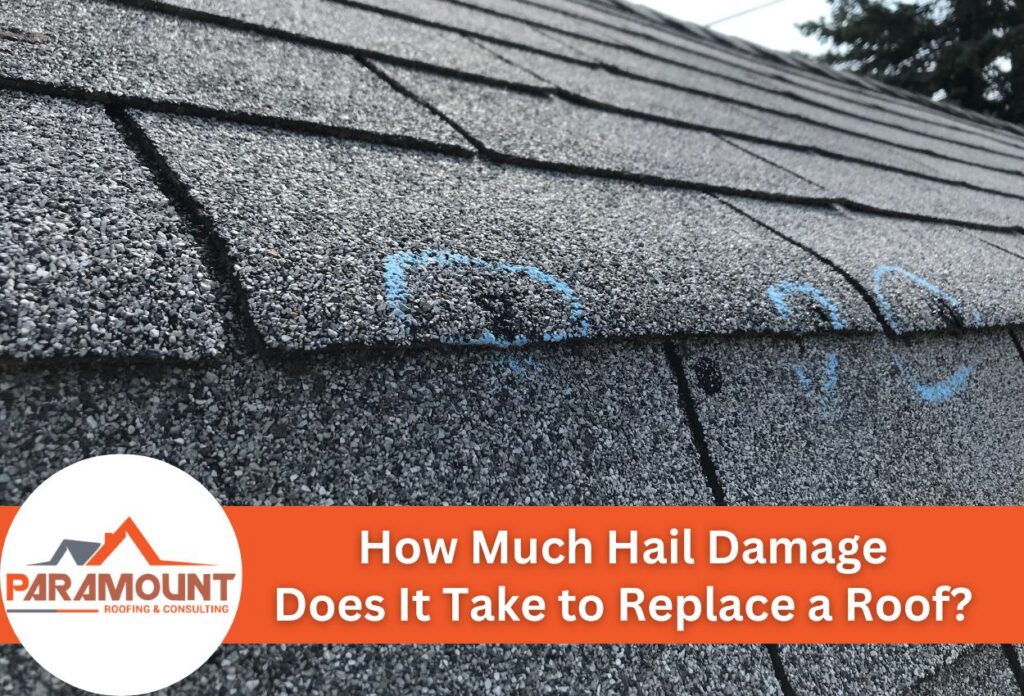

Insurance adjusters and roofing contractors generally use a 1-inch (quarter-sized) hail threshold as the baseline for functional damage on asphalt shingles, and the metro Atlanta area, including Douglasville and surrounding counties, experiences hailstorms that meet or exceed that size multiple times each year. If a storm dropped hail that size or larger on your property, your roof may qualify for a full insurance-covered replacement.
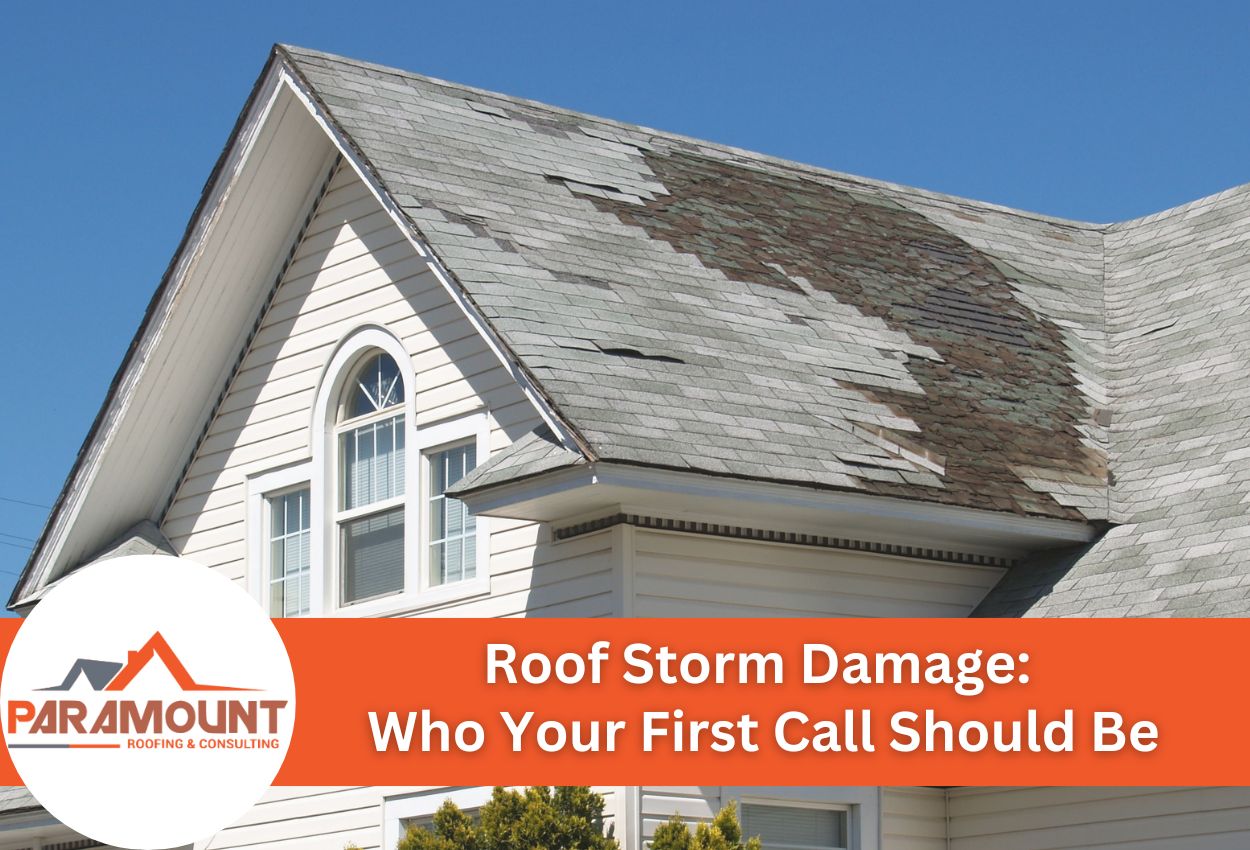
Not all hail damage is treated equally. Cosmetic damage surface scuffs, minor granule loss that leaves the shingle mat intact rarely justifies replacement and is often excluded under many homeowners insurance policies. Functional damage is different. That includes bruised mat, cracked fiberglass reinforcement, or granule displacement that exposes the underlayment beneath. That type of damage shortens roof life and typically meets the threshold for an insurance claim.
What Size Hail Actually Causes Roof Damage and Where Is the Replacement Threshold?
Hail at 1 inch (quarter-sized) is the widely accepted minimum size for functional damage to standard 3-tab asphalt shingles, while Class 4 impact-resistant shingles are rated to withstand up to 2-inch hail without functional damage. The table below shows what each hail size range typically does to a roof and how insurance adjusters generally respond.
| Hail Size | Common Reference | Damage Outcome | Shingle Impact Type | Likely Insurance Disposition |
|---|---|---|---|---|
| Under 3/4 inch | Marble | Surface scuffs, minor granule loss | Cosmetic only: mat intact | Cosmetic only claim unlikely |
| 3/4 to 1 inch | Penny to quarter | Granule displacement: borderline mat bruising | Cosmetic to early functional | Possible claim adjuster discretion |
| 1 to 1.75 inches | Quarter to golf ball | Bruised mat, cracked fiberglass, exposed underlayment | Functional damage | Likely replacement claim |
| 1.75 inches and above | Golf ball and larger | Punctures, severe granule loss, structural compromise | Severe functional damage | Certain replacement claim |
Wind speed matters too. Hail at 1 inch combined with winds over 60 mph can cause functional damage equal to 1.5-inch hail in calm conditions. Adjusters factor storm wind reports into their assessments, so a borderline claim can shift quickly with that data. Many newer subdivisions across Cobb, Cherokee, and Forsyth counties were built with Class 4 impact-resistant shingles, which changes claim eligibility since those roofs are designed to handle up to 2-inch hail without functional damage. If your home has standard 3-tab shingles and the storm dropped 1-inch or larger hail, you are at the replacement threshold regardless of how the roof looks from the ground.
What Are the Signs Hail Damage Is Bad Enough to Replace the Entire Roof?
Replacement-level hail damage is typically confirmed when an adjuster finds 8 or more functional impact points within a single 10-square-foot test square on any roof slope. Here are the specific physical signs that push a roof from borderline repair territory into full replacement.
- Random-pattern granule loss exposing black underlayment: Missing granules in scattered, circular patterns not along edges or seams point to impact damage. When the dark mat underneath is visible, the shingle has lost its UV and weather protection.
- Soft bruising of the fiberglass mat: Press a shingle firmly with your thumb or a hand probe. A spongy or soft spot under the surface granules means the mat is fractured internally, even if the top looks intact.
- Cracked or fractured shingles: Visible splits, especially in a starburst or linear pattern, mean the fiberglass reinforcement layer has broken. A cracked shingle cannot shed water reliably.
- Damaged ridge cap shingles: Ridge caps take the most direct hits during a hailstorm. Dents, splits, or heavy granule loss on ridge caps are often the clearest sign of functional damage across the entire slope below.
- Dented or creased metal flashing: Hail deforms aluminum or galvanized flashing around chimneys, vents, and valleys. Each dent is a documented impact point that supports the claim.
- Spatter marks on gutters and downspouts: Round dents spaced consistently across gutter faces show impact density. More than 8 to 10 marks per linear section correlates with replacement-level strike frequency on the roof above.
- 8 or more hits per 10-square-foot test square: This is the industry-standard adjuster threshold. Most carrier guidelines approve a full slope replacement once this count is reached on a representative test area of each slope.
Heavy tree cover in Douglas, Gwinnett, and Carroll counties can hide impact points by deflecting stones mid-fall. Get a professional inspection within 30 days of any storm. Rain from future storms washes granules further away, making borderline damage harder to document and weakening an otherwise valid claim.
How Do You Know If Hail Damaged Your Roof Enough to File an Insurance Claim?
File a claim when documented hail of 1 inch or larger hit your property, and you can confirm at least one of the physical signs below. But first, run through this checklist to build a case your insurance carrier cannot easily dismiss.
- Record the storm date and confirm hail size: Pull hail size data from the NOAA Storm Database or a weather app within 24 to 48 hours of the storm. Official storm records showing 1-inch or larger hail at your address establish the foundation for every step that follows.
- Inspect soft metals before anything else: Check gutters, AC condenser fins, and painted wood trim for round dents. Denting on these surfaces during the same storm event is strong physical proof that hard shingles above took impact, too. Adjusters treat this as corroborating evidence.
- Photograph granule buildup in gutters: Granules pooling heavily at downspout outlets after a storm indicate shingle surface loss. Take dated photos within 48 hours, before the next rain washes granules further down the system.
- Count impact marks on individual shingles in multiple locations: Check at least three spots on each slope. Finding 8 or more marks per 10-square-foot area, the industry-standard adjuster threshold in more than one location, strongly supports a replacement-level claim.
- Compare your deductible to the estimated repair cost: Georgia homeowners insurance deductibles commonly range from $1,000 to 2% of the dwelling’s insured value. On a home insured at $300,000, that 2% equals $6,000, making a claim on minor damage financially counterproductive if repair costs fall below that number.
Understanding what “functional damage” means matters here. Most carriers require damage that compromises the roof’s ability to shed water or has materially shortened its remaining service life, not just surface scuffs. Georgia follows replacement cost value (RCV) as the standard for most homeowner policies, meaning a qualifying claim pays for a full replacement minus your deductible.
If an adjuster denies a claim you believe is valid, homeowners have the right to request a re-inspection or hire a public adjuster. One important warning: Georgia law, specifically under the Fair Business Practices Act (O.C.G.A. § 10-1-393.17), prohibits contractors from waiving insurance deductibles. Any contractor offering to “cover your deductible” is a red flag for predatory practices. A reputable contractor documents your damage and supports your claim honestly; they do not manipulate the insurance process on your behalf. Paramount Roofing & Consulting offers hail damage assessments and insurance claim assistance to help homeowners across the Greater Atlanta area approach this process the right way.
Repair vs. Full Replacement: What Do the Numbers Actually Say?
A spot repair on hail-damaged shingles costs $350 to $900 in the Greater Atlanta market, but on a roof with only 8 years of remaining life, that same repair can cost more per year than a claim-funded full replacement. The table below breaks down three common post-storm scenarios by cost, timeline, lifespan, and insurance coverage.
| Scenario | Typical Cost Range (Metro Atlanta) | Average Completion Time | Expected Remaining Lifespan After Work | Insurance Coverage (Hail Claim) |
|---|---|---|---|---|
| Spot repair (under 10 squares damaged) | $350 to $900 | 1 to 2 days | Reduced by 5 to 10 years vs. undamaged roof | Rarely covered, usually below deductible |
| Partial slope replacement (10 to 15 squares) | $2,500 to $5,500 | 2 to 4 days | 10 to 15 years depending on existing roof age | Sometimes covered if functional damage confirmed on that slope |
| Full replacement 2,000 sq ft home (standard shingles) | $9,500 to $16,000 | 1 to 3 days | 25 to 30 years (new roof) | Typically covered under qualifying hail claim (RCV policy) |
| Full replacement Class 4 IR shingle upgrade | $11,000 to $19,000 ($1,500 to $3,000 over standard) | 1 to 3 days | 25 to 30 years with higher impact resistance | Same coverage. Many Georgia carriers add a 20% to 30% premium discount |
The cost-per-year math is where spot repairs often fail homeowners. A $700 repair on a roof with 8 years of remaining life already reduced to 3 to 4 years by functional bruising works out to roughly $175 to $233 per year. Spreading your out-of-pocket $2,000 deductible for a claim-funded replacement over 25 to 30 years costs you just $66 to $80 per year, but leaves a home with a brand-new, fully warrantied roof.
A Class 4 impact-resistant shingle upgrade adds $1,500 to $3,000 upfront, but a 20% to 30% insurance premium discount typically recovers that cost within 4 to 6 years, making it the stronger long-term investment for homeowners across the Greater Atlanta area who face recurring hail seasons.
What Happens During a Professional Hail Damage Roof Inspection and What Should You Expect?
A thorough hail damage inspection on a standard residential roof takes 45 to 90 minutes and follows a clear, repeatable sequence. Knowing what happens at each step helps homeowners spot the difference between a legitimate inspection and a post-storm scam.
| Inspection Step | What the Inspector Does | Why It Matters |
|---|---|---|
| 1. Storm data verification | Confirms official hail size and storm date using weather records | Establishes the foundation for the insurance claim |
| 2. Soft metal inspection | Checks gutters, AC fins, and painted trim for round dents | Corroborates shingle impact when hard surfaces show damage |
| 3. Slope-by-slope shingle assessment | Counts impact marks within 10-square-foot test squares on each slope | Determines if the 8-hit threshold is met for replacement-level damage |
| 4. Ridge cap and flashing evaluation | Inspects ridge caps and metal flashing around chimneys, vents, and valleys | Ridge caps take direct hits: each dent on flashing is a documented impact point |
| 5. Interior attic check | Looks for active leaks, water stains, or daylight intrusion from above | Confirms whether structural damage has already compromised the home’s interior |
A legitimate professional roof inspection often costs nothing upfront, provides a written damage report, and never pressures homeowners to sign a contract on-site. Predatory contractors who canvass neighborhoods after major hailstorms in the Atlanta metro often skip several of these steps entirely. Schedule an inspection within 30 days of the storm: waiting longer allows future rain to wash away granule evidence and weakens an otherwise valid claim.
Paramount Roofing & Consulting provides hail damage assessments and roof insurance claim assistance across Douglasville, Marietta, Kennesaw, Newnan, Peachtree City, and the broader Greater Atlanta service area.
Ready to Find Out If Your Roof Qualifies for Replacement After Hail Damage?
Most Georgia insurance carriers require hail damage claims to be filed within 1 year of the storm date, and early documentation consistently produces stronger claim outcomes than waiting. Paramount Roofing & Consulting provides no-pressure hail damage assessments and insurance claim assistance across Douglasville and the Greater Atlanta area, including Douglas, Cobb, Gwinnett, Fayette, and surrounding counties.
A free inspection puts documented evidence in your hands before that window closes. The assessment is written, honest, and never includes a push to sign anything on-site.
Schedule your free roof inspection
Not ready to schedule? Learn more about storm damage roof repairs.