(404) 971-2880
Metal Roof vs. Shingles: Which Is the Better Choice for Georgia Homes?
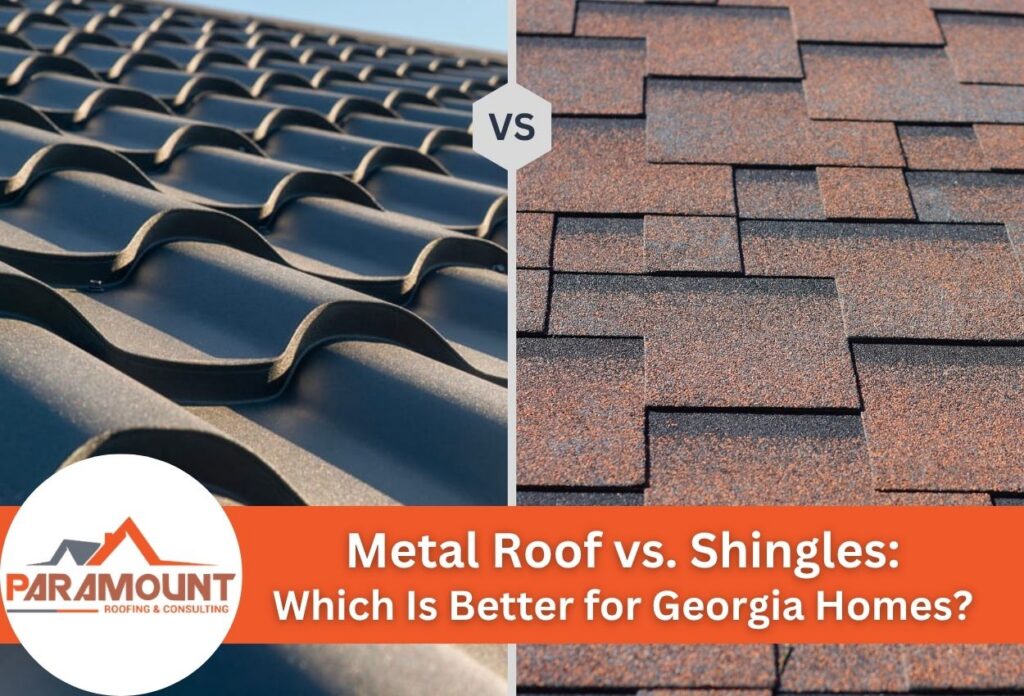

For most Georgia homeowners, metal roofs last longer and handle heat better than asphalt shingles, but shingles still win on upfront cost and account for the majority of roof replacements across the state. That makes this a tradeoff, not a clear-cut answer. The right choice depends on your budget, how long you plan to stay in the home, and how much Georgia’s weather will stress your roof over time.
Georgia averages about 50 inches of rain per year, annual relative humidity stays above 70% across most of the state, and summers bring months of sustained UV exposure. Those three conditions wear roofing materials down faster than in drier, cooler climates. What holds up well here matters more than what performs well in a brochure.
How Do Metal Roofs and Shingles Actually Perform in Georgia’s Heat and Humidity?
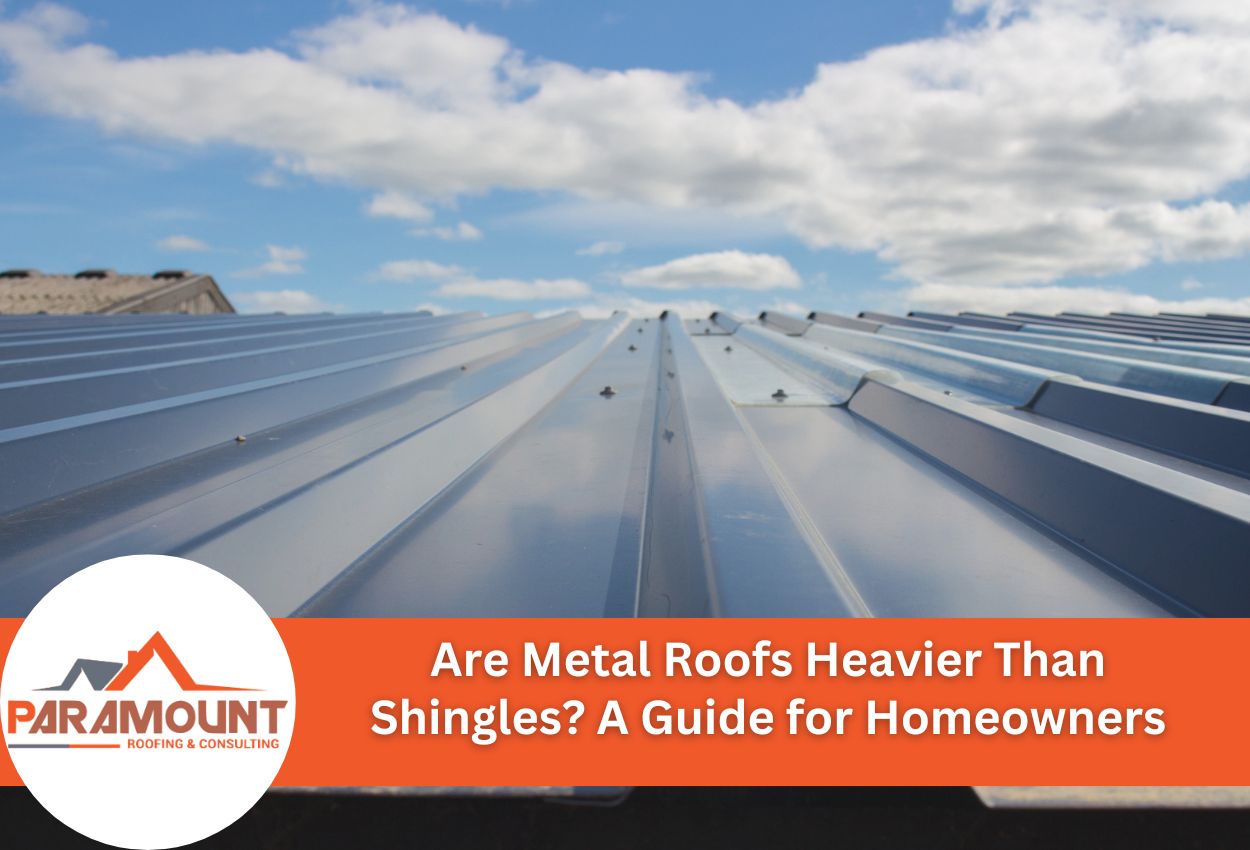
Metal roofs outperform asphalt shingles on nearly every climate-related dimension that matters in Georgia, from heat reflection to moisture resistance to algae growth.
| Performance Dimension | Metal Roof | Asphalt Shingles |
|---|---|---|
| Heat Resistance | Reflects 25 to 40% more solar radiation than asphalt: attic temps measurably lower | Absorbs heat: dark shingles can reach 150 degrees Fahrenheit+ surface temperature |
| Humidity/Moisture Resistance | Non-porous: does not absorb moisture: rated for sustained rain exposure | Granule layer absorbs moisture over time: degrades faster above 70% humidity |
| Wind Rating | 130 to 160 mph (varies by panel system and fastening method) | 60 to 130 mph (Class D to Class H: impact-resistant shingles at higher end) |
| UV Degradation Rate | Slow: factory coatings resist UV breakdown for 20 to 40 years | Moderate to fast: granule loss accelerates with sustained Southern UV exposure |
| Algae/Moss Resistance | High: metal surface does not support algae or moss growth | Low to moderate: requires algae-resistant treatment in humid climates |
| Typical Maintenance Interval | Every 10 to 15 years (checking sealants, flashings, and fasteners) | Every 3 to 5 years in high-humidity Southern climates |
Georgia’s humid climate accelerates two specific problems for asphalt shingles: granule loss and algae growth. Shingles in high-humidity Southern climates typically need algae-resistant treatment or full replacement 3 to 5 years sooner than the same product installed in a drier region. Metal roofs sidestep both issues entirely.
The heat difference is also measurable. Metal roofs reflect 25 to 40% more solar radiation than standard asphalt shingles, a real advantage during Georgia’s months of 90-degree-Fahrenheit summers when attic heat gain drives up cooling costs. That solar reflection gap is the single biggest performance advantage metal holds over shingles in Georgia’s climate.
What Does a Metal Roof vs. Shingles Cost Comparison Look Like for Georgia Homeowners?
Over 50 years, asphalt shingles typically cost more in total than a standing seam metal roof, even though shingles cost far less upfront for a 2,000 sq ft Georgia home.
| Cost Factor | Metal Roof | Asphalt Shingles |
|---|---|---|
| Average Material Cost per Square (100 sq ft) | $350 to $700 (metal shingles): $600 to $1,000 (standing seam) | $100 to $200 |
| Average Labor Cost per Square | $200 to $400 | $75 to $175 |
| Total Installed Cost 2,000 sq ft Georgia Home | $12,000 to $20,000 (metal shingles): $18,000 to $30,000 (standing seam) | $4,500 to $9,000 |
| Expected Replacement Cycle over 50 Years | 1 installation (40 to 70-year lifespan) | 2 to 3 replacements (15 to 25-year lifespan per install) |
| Estimated 50-Year Total Cost of Ownership | $18,000 to $30,000 (one-time standing seam install) | $13,500 to $27,000 (2 to 3 replacements combined) |
| Permit and Structural Evaluation Costs | $200 to $800+ (structural review often required when switching from shingles) | $200 to $400 (standard replacement permit) |
Atlanta-metro labor rates, including the Douglasville and DeKalb market served by Paramount Roofing & Consulting, sit at the mid-to-upper end of these ranges. Homeowners in that area should plan their budgets accordingly. Permit costs add another variable: jurisdictions like Athens-Clarke County require permits for full replacements and material changes, and switching from shingles to metal can trigger a structural evaluation, adding $200 to $800 or more depending on the project’s scale.
The 50-year cost gap between metal and shingles narrows significantly once multiple shingle replacements are factored in, making the upfront premium for metal a defensible long-term decision for homeowners planning to stay in their home for 20+ years. Homeowners who need help managing the upfront investment can explore roofing financing options to spread the cost over time.
How Long Does a Metal Roof Last in Georgia Compared to Shingles?
Standing seam metal roofs last 40 to 70 years in Georgia, while standard 3-tab asphalt shingles typically reach only 15 to 20 years, and Georgia’s heat and humidity push both materials toward the shorter end of their ranges.
Architectural shingles perform better than 3-tab, lasting 20 to 30 years under normal conditions, but Georgia’s sustained humidity above 70% and months of intense UV exposure accelerate granule loss and algae growth. That compresses their real-world lifespan closer to the 20-year mark for many homeowners. Metal shingles land in the middle of the range at 30 to 45 years, making them a strong middle-ground option between architectural shingles and full standing seam systems.
Where Temperature Changes Matter More
Repeated temperature changes freezing overnight, then thawing during daylight hours stress roofing materials by expanding and contracting them repeatedly. In Georgia, that stress is mainly a concern in northern mountain counties like Rabun, Towns, and Union, where winter conditions are harsher. Metal handles those cycles far better than asphalt because it doesn’t crack or lose granules under thermal movement. In the Atlanta metro and southern Georgia, this factor matters much less, and heat and humidity become the dominant durability concerns instead.
What Warranties Actually Cover
Most premium architectural shingles carry lifetime limited warranties, but those warranties require licensed installation and proper ventilation standards to stay valid. Standing seam metal systems commonly carry 40-year paint warranties and 20- to 40-year underlayment warranties longer coverage that reflects the material’s actual lifespan. A warranty is only as reliable as the installation behind it, so working with a licensed contractor is not optional if you want that coverage to hold. A professional residential roof inspection can also confirm the condition of your current roof before any material decisions are made.
Are Metal Roofs Worth It in the South? What Georgia Homeowners Should Factor Into the Decision
Metal roofs are worth it for Georgia homeowners who plan to stay in their home 20+ years, but shingles remain the right call for buyers working with a budget under $10,000 or expecting to sell within a decade. The answer depends almost entirely on your situation, not the material itself.
| Homeowner Scenario | Recommended Material | Key Reason |
|---|---|---|
| Budget under $10,000 | Asphalt shingles | Full shingle install runs $4,500 to $9,000: metal starts at $12,000+ |
| Planning to stay 20+ years | Standing seam metal | 40 to 70-year lifespan avoids 2 to 3 shingle replacement cycles |
| Replacing over existing wood shake | Metal panel or metal shingle | Georgia residential code prohibits installation over existing wood shake; the old roof must be fully removed before proceeding. |
| Re-roofing in a high-wind zone | Standing seam metal | Standing seam systems are rated for 130+ mph winds, higher than most shingle products. |
Energy savings also shift the math over time. ENERGY STAR-rated metal roofs can reduce cooling costs by 10% to 25% annually. Georgia’s cooling season runs roughly 6 to 7 months, so that reduction adds up. Most average Georgia homes see savings of $150 to $400 per year depending on home size and current insulation levels.
One hard constraint to check before requesting quotes: Georgia residential code prohibits metal shingle installation on roof slopes below 3:12. If any section of your roof falls below that slope, metal shingles are not a code-compliant option for that section, and you will need shingles or a different low-slope system there instead. Paramount Roofing & Consulting can measure slope and confirm compatibility before any material decisions are made.
Which Roofing Material Offers Better Long-Term Value for Georgia Homeowners?
Over 50 years, a standing seam metal roof installed once at $20,000 to $30,000 often costs less in total than replacing asphalt shingles 2 to 3 times, with the breakeven point typically falling between years 25 and 35. A homeowner who installs shingles at $5,000 to $9,000 upfront may spend $15,000 to $27,000 or more across multiple residential roof replacements over that same period. That crossover is the core of the metal roof value argument.
Resale value adds another layer to the comparison. Metal roofs recoup about 60% to 85% of installation cost at resale based on national remodeling data. Architectural shingles recoup about 60% to 70%. The gap is narrower than many homeowners expect, but in competitive Atlanta-metro markets, a newer metal roof can stand out as a differentiating feature, particularly for buyers looking to avoid a replacement within their first decade of ownership.
Insurance savings may be the most overlooked part of the metal roof value equation. Many Georgia insurers offer premium discounts of 5% to 30% for impact-resistant or metal roofing systems. Over 10 to 20 years, those discounts can offset $1,500 to $6,000 or more of the higher upfront cost. That range varies by insurer, coverage level, and roofing product, so requesting a quote comparison from your insurer before finalizing your material choice is strongly recommended. Paramount Roofing & Consulting can provide documentation on roofing specs that insurers typically require to process a discount request.
Ready to Compare Roofing Options for Your Georgia Home? Here’s How to Get Started
Choosing between a $4,500 to $9,000 shingle roof and an $18,000 to $30,000 standing seam metal system is a decision that deserves real numbers for your specific roof, not estimates based on averages. Paramount Roofing & Consulting works with homeowners across the Douglasville and Atlanta-metro area to deliver top-notch residential roofing services and provide side-by-side material quotes so you can see the actual difference before committing.
Request a free inspection and ask for a quote that covers both metal and shingles for your roof size and structure. That single step gives you the comparison you need to make a confident decision.
If you’re looking for a metal roofing system installation, start with an estimate.
Not ready to schedule? Learn more about our professional roof inspections.