(404) 971-2880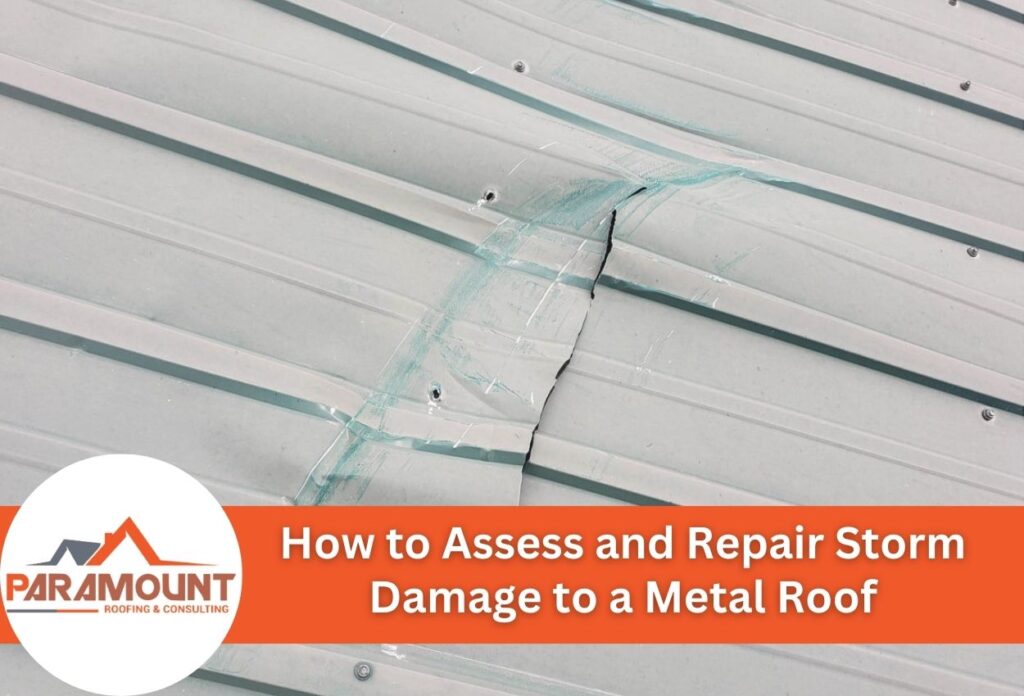
Key Points:
- Immediately assess metal roof storm damage to determine necessary repairs, identifying when professional intervention is crucial for safety and effective restoration.
- Effective metal roof damage repairs require assessing specific hail or wind damage, taking emergency steps, and understanding when to repair versus replace.
- Document all damage for insurance claims and implement proactive maintenance to prevent future storm damage and extend your roof’s lifespan.
Storm damage to metal roofing systems requires immediate attention to prevent expensive structural problems and leaks. Metal roofs, while highly durable, can suffer significant damage from hail impacts, high winds, and severe weather conditions that commonly affect the Atlanta area during storm season.
Repairing metal roof storm damage begins with a thorough assessment to identify both visible and hidden problems. Dented panels, loosened fasteners, compromised seals, and displaced roofing materials are common issues that develop after severe weather. Wind-damaged metal roof restoration often involves addressing multiple types of damage simultaneously, as storms rarely cause isolated problems.
Understanding the difference between emergency metal roof storm repairs that require professional intervention and minor issues homeowners can temporarily address helps property owners make informed decisions about their roofing needs. Metal roof hail damage repair typically involves panel replacement or specialized repair techniques, while metal roof leak repair after a storm focuses on sealing compromised areas to prevent water damage. Some situations may warrant storm-damaged metal roof replacement when repair costs exceed replacement value or structural integrity has been severely compromised.
Identifying Common Types of Storm Damage on Metal Roofing Systems
Recognizing specific types of storm damage helps property owners understand the extent of repairs needed and prioritize urgent issues. Metal roof hail damage repair typically addresses two primary types of impact damage that affect roof performance and longevity.
Hail damage creates distinctive denting patterns across metal panels, with larger hailstones producing more pronounced indentations that weaken the metal structure. Granule loss on coated surfaces exposes the underlying metal to moisture and UV rays, accelerating corrosion processes. Impact marks from hail strikes compromise the roof’s protective barrier, creating potential entry points for leaks that require immediate metal roof leak repair after a storm.
Wind damage presents different challenges requiring wind-damaged metal roof restoration techniques. High winds lift panels from their secure positions, tear flashing away from critical junction points, and expose fasteners that should remain sealed beneath protective coverings. Structural displacement occurs when sustained winds or sudden gusts shift entire sections of roofing materials, creating gaps and misalignments that require emergency metal roof storm repairs to prevent further deterioration and protect interior spaces from weather exposure.
Emergency Response Steps When Your Metal Roof Suffers Storm Damage
Taking immediate protective measures after storm damage helps minimize additional property damage while awaiting professional repairs. Temporary solutions focus on preventing water intrusion and securing loose roofing materials that could become hazardous.
Applying emergency tarps over damaged sections provides temporary protection during metal roof leak repair after storm assessments. Secure tarping materials with appropriate fasteners that won’t cause additional damage to existing panels. Remove any debris from gutters and drainage systems to ensure proper water flow away from the structure. Emergency metal roof storm repairs should prioritize areas where water actively enters the building or where loose materials present safety hazards.
Safety protocols require homeowners to avoid accessing damaged roofing areas during hazardous conditions. Never attempt roof inspections during wet weather, high winds, or when structural damage is visible. Document damage from ground level using photographs for insurance purposes before professional assessment begins. Contact qualified roofing professionals immediately for wind-damaged metal roof restoration when extensive damage is apparent. Temporary protective measures should only address immediate threats while waiting for professional evaluation, as improper emergency repairs can complicate permanent restoration efforts and potentially void warranty coverage on existing roofing systems.
Professional Repair Techniques for Storm-Damaged Metal Roofing
Professional restoration techniques for storm-damaged metal roofing require specialized knowledge of panel replacement methods and advanced sealing. Metal roof hail damage repair involves removing severely compromised sections and installing matching panels that integrate seamlessly with existing roofing materials. Proper fastening techniques ensure new panels maintain structural integrity under future weather conditions while creating weather-tight seals that prevent leaks.
Panel replacement begins with careful removal of damaged sections without disturbing adjacent materials. Professional contractors match existing panel profiles, colors, and coating specifications to maintain roof uniformity and performance standards. Storm-damaged metal roof replacement sections require precise measurements and custom fabrication to ensure proper overlap patterns and expansion joint alignment. Specialized fasteners designed for metal roofing applications secure new panels while accommodating thermal movement that occurs with temperature changes.
Metal roof leak repair after a storm addresses punctures, separated seams, and compromised flashing areas through targeted sealing strategies. Wind-damaged metal roof restoration often involves repairing lifted seams using mechanical joining techniques and high-performance sealants rated for metal roofing applications. Emergency metal roof storm repairs may require temporary patches while permanent solutions are fabricated, ensuring continuous protection during the restoration process.
When Restoration Makes More Sense Than Full Replacement
Determining whether targeted repairs can restore the structural integrity of a metal roof effectively requires a close look at the extent of the damage and long-term performance expectations. Several factors influence the decision between repairing metal roof storm damage and pursuing complete system replacement, with repair costs typically representing a fraction of replacement expenses when damage remains localized.
Metal roof hail damage repair becomes the preferred option when impacts affect less than 30% of the total surface of the roof and structural components remain sound. Wind-damaged metal roof restoration proves cost-effective when fastener systems maintain their structural integrity and panel displacement occurs without significant tearing or cracking. Emergency metal roof storm repairs that address isolated problem areas often extend the roof’s lifespan substantially while preserving the majority of the existing investment.
Damage thresholds that favor restoration include superficial denting without coating compromise, minor seam separations that respond well to professional sealing, and localized punctures that don’t affect structural decking. Metal roof leak repair after a storm addresses leak issues effectively when damage remains confined to specific areas rather than creating systemic problems throughout the roofing system. Storm-damaged metal roof replacement becomes necessary when repair costs approach 60% of replacement value or when widespread damage compromises the roof’s fundamental weather protection capabilities.
Working with Insurance Companies for Storm Damage Claims
Successful insurance claims for metal roof storm damage require comprehensive documentation that demonstrates both the extent of damage and the necessity for professional repairs. Insurance companies evaluate claims based on specific evidence types, making proper documentation essential for reimbursement approval. Professional inspections provide detailed assessments that support metal roof hail damage repair claims, while photographic evidence creates visual records of damage patterns and severity levels.
High-quality photographs should capture damage from multiple angles, including close-up shots of individual impacts and wide-angle views showing overall roof conditions. Documentation requirements extend beyond basic photography to include detailed damage reports that identify specific repair needs and material requirements. Professional contractors provide comprehensive assessments that outline the necessary work for repairing metal roof storm damage, creating documentation that insurance adjusters rely on when determining coverage amounts.
Coverage limitations for metal roofing systems vary significantly between insurance policies, particularly regarding storm-damaged metal roof replacement versus repair scenarios. Understanding policy deductibles helps property owners plan financially for emergency metal roof storm repairs and wind-damaged metal roof restoration projects. Metal roof leak repair after a storm may fall under different coverage categories than structural replacement, affecting out-of-pocket expenses and claim processing timelines.
Preventing Future Storm Damage to Your Metal Roof
Proactive maintenance practices significantly reduce the likelihood of severe storm damage and extend the service life of metal roofing systems. Regular inspection schedules identify potential vulnerabilities before bad weather exposes weaknesses that require emergency metal roof storm repairs. Professional evaluations every 6 months focus on fasteners’ structural integrity, panel alignment, and sealant conditions that directly impact storm resistance capabilities.
Preventive maintenance includes tightening loose fasteners that could fail during high winds, replacing deteriorated sealants around gaps and seams, and clearing debris that accumulates in valleys and drainage areas. Metal roof hail damage repair costs decrease substantially when minor issues receive attention before storm season begins. Wind-damaged metal roof restoration becomes less frequent when expansion joints receive regular maintenance and panel connections remain properly secured throughout seasonal temperature fluctuations.
Upgrade opportunities during repair projects enhance overall storm resistance through improved materials and installation techniques. Enhanced fastening systems with higher wind ratings provide superior holding power during severe weather. Impact-resistant coating applications protect against hail damage while maintaining the roof’s appearance. Storm-damaged metal roof replacement projects present ideal opportunities to incorporate these improvements, reducing future metal roof leak repair after storms through superior weather protection capabilities that exceed original construction standards.
Expert Metal Roof Storm Damage Repair in Atlanta
If your metal roof has recently been affected by a storm in Atlanta, it’s crucial to address any damage immediately to prevent further complications. Paramount Roofing & Consulting specializes in repairing metal roof storm damage, ensuring your roof returns to its best possible condition swiftly and efficiently. Our team is skilled in handling all types of storm damage, from hail impacts to severe wind uplifts. Don’t wait for minor damage to escalate into major issues.
Take the right step towards securing your property by calling Paramount Roofing & Consulting today at (404) 971-2880. Our experts are ready to provide you with professional assessments and high-quality repairs tailored to your specific needs.