(404) 971-2880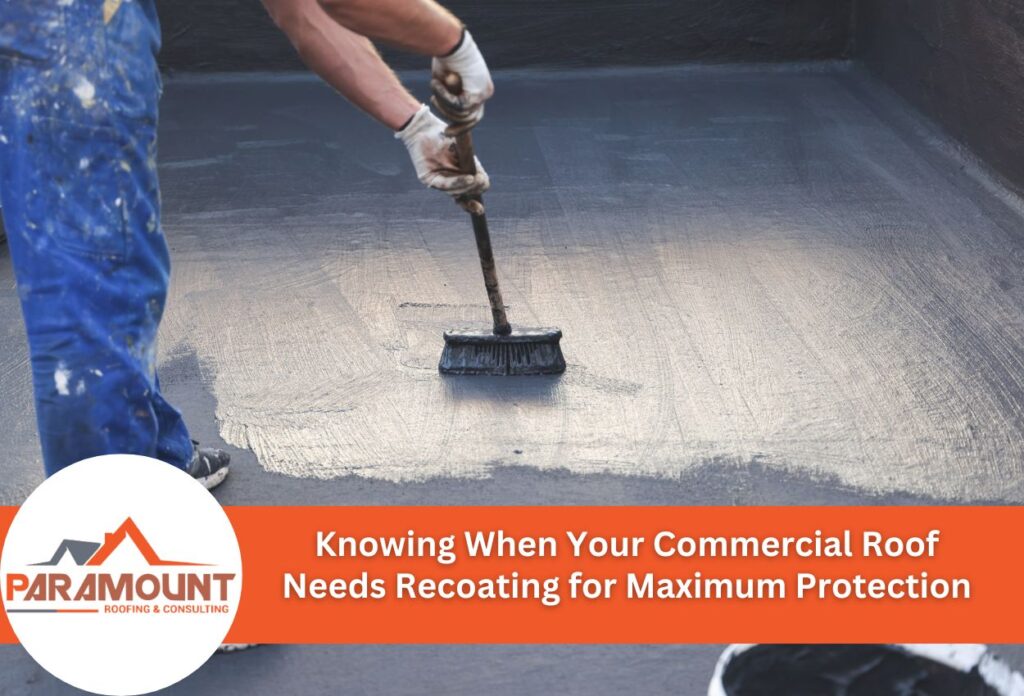
Key Points About Recoating Commercial Roofs
- Most commercial roofs need recoating every 10 to 15 years, depending on the roof type, age, and local weather conditions.
- Early signs like cracking, peeling, ponding water, and higher energy bills mean recoating may be needed soon.
- Recoating at the right time can double your roof’s lifespan and delay full replacement, saving high costs.
Commercial roofs endure constant exposure to weather that gradually breaks down protective coatings and compromises structural integrity. Understanding when to recoat a commercial roof prevents emergency repairs and extends the roofing system’s operational lifespan. Property owners who master proper timing for commercial roof recoating save on premature replacement costs.
Most commercial roofing systems require recoating every 10 to 15 years, though this frequency varies based on several factors, like:
- The type of roofing material
- The age of the building
- Local climate conditions
- The current roof condition
All of these can influence recoating schedules.
Signs commercial roofs need recoating include visible coating deterioration, increased energy costs, minor leaks, and surface chalking or cracking. Developing a comprehensive commercial roof maintenance schedule helps identify these warning signs before expensive damage occurs. A well-maintained commercial roofing system’s lifespan can reach 30 years or more with proper recoating intervals, while neglected roofs may fail within 15 years. Recognizing the right recoating timing protects both the building and the investment represented by commercial roofing systems.
Visual Warning Signs That Indicate Your Roof Requires Immediate Attention
Surface-level indicators provide the earliest warning signs that commercial roof recoating is necessary. Cracking appears as the protective coating loses flexibility and begins separating from the underlying membrane. Peeling occurs when adhesion fails, creating loose sections that allow leaks to form beneath the roof coating system. Chalking shows as a powdery residue that rubs off when touched, indicating UV degradation has compromised the coating’s protective properties.
Color fading signals extensive UV damage that reduces the roof’s reflective capabilities and increases cooling costs. These surface deterioration patterns typically develop gradually but accelerate rapidly once the protective barrier becomes compromised. Professional evaluation becomes essential when multiple surface indicators appear simultaneously, as this suggests the commercial roof maintenance schedule requires immediate adjustment.
Water-related warning signs demand urgent attention to prevent structural damage. Ponding water creates continuous stress on flat roofing systems and accelerates coating breakdown in affected areas. Minor leaks, even small drips during heavy rainfall, indicate a failure of the coating that will get worse without intervention. Leaks around flashing, seams, or gaps suggest the commercial roofing system’s lifespan faces a significant reduction without quick recoating. These water-related symptoms require immediate professional assessment to determine whether spot repairs or complete recoating provides the most effective solution for maintaining roof integrity.
Standard Recoating Timelines Based on Your Roofing System Type
Different commercial roofing materials age and perform differently, which affects how often recoating should be evaluated, rather than following a fixed schedule. TPO roofing systems may become candidates for recoating as surface wear, loss of reflectivity, or seam aging develops over time, particularly in high-UV or high-heat environments. The membrane itself does not rely on coatings for waterproofing, so recoating decisions are typically driven by surface condition and energy performance goals rather than material failure.
EPDM roofing systems are often evaluated for recoating as the membrane shows signs of weathering, surface oxidation, or seam aging that can reduce long-term performance. While EPDM remains flexible for decades, coatings may be used to restore reflectivity or extend its service life when the underlying membrane remains structurally sound.
Modified bitumen roofs commonly need to be recoated sooner due to surface wear, granule loss, and exposure of asphalt layers from thermal cycling and UV exposure. Built-up roofing systems also rely heavily on surface protection, with recoating timelines influenced by the number of plies, surfacing condition, and overall maintenance history. Because each roofing system responds differently to environmental stressors, recoating decisions should be based on material condition, climate exposure, and inspection findings rather than a universal timeframe.
Age-Related Guidelines for Commercial Roof Recoating Decisions
The age of a commercial roofing system plays an important role in determining the best recoating strategies and timing decisions. Newer roofs between 5 to 10 years old benefit from preventive maintenance that focuses on extending the commercial roofing system’s lifespan through proactive care. These younger systems typically show minimal wear patterns but may display early warning signs that indicate the need for protective intervention before major deterioration occurs.
Roofs in the 5 to 10-year age range usually require their first recoating application, establishing a foundation for long-term performance optimization. During this period, the original coating begins showing subtle signs commercial roofs need recoating, such as slight fading or minor surface wear. Preventive recoating at this stage maximizes the flat roof recoating timeline and ensures continued protection against leaks and UV damage.
Commercial roofing systems over 10 years old require a more comprehensive assessment to determine whether recoating remains a viable maintenance option or if complete replacement becomes necessary. These older systems often display multiple indicators of deterioration that must be carefully evaluated against the remaining structural integrity of the underlying membrane. The commercial roof recoating frequency for aged systems depends heavily on maintenance history and environmental exposure.
Establishing an appropriate commercial roof maintenance schedule for older systems requires balancing the cost of recoatings against that of a potential replacement. Professional evaluation becomes essential to avoid investing in recoating when the underlying system lacks sufficient remaining lifespan to justify the maintenance expense.
Creating an Effective Preventive Maintenance Schedule
A systematic inspection routine forms the foundation of effective commercial roof maintenance that identifies recoating needs before emergency repairs become necessary. Property managers should establish quarterly visual inspections that examine coating condition, drainage systems, and potential problem areas around roof gaps and edges. These regular assessments create documentation patterns that track deterioration rates and help predict when commercial roof recoating frequency requirements will emerge.
Seasonal checkpoint evaluations provide a deeper analysis of roofing system performance during different weather conditions. Spring inspections focus on winter damage assessment, while summer evaluations examine heat-related coating degradation and thermal expansion effects. Fall checkpoints prepare roofing systems for harsh weather by identifying vulnerable areas that may develop leaks during the winter. These seasonal assessments ensure signs commercial roofs need recoating receive prompt attention before minor issues escalate into expensive emergencies.
Professional evaluations complement routine inspections by providing technical expertise that property managers may lack. Annual professional assessments document coating thickness, membrane condition, and structural integrity using specialized equipment and industry knowledge. These expert evaluations establish accurate timelines for a flat roof recoating and provide detailed maintenance recommendations. Integrating recoating decisions into overall building maintenance budgets requires consistent documentation practices that track inspection findings, repair history, and performance trends. Strong vendor relationships with qualified roofing contractors ensure a quick response when commercial roof maintenance schedule requirements demand immediate attention, protecting the commercial roofing system’s lifespan through proactive care rather than reactive emergency repairs.
Weather and Seasonal Factors That Influence Recoating Timing
Georgia’s climate patterns create specific windows of opportunity that optimize commercial roof recoating application and curing processes. Spring and fall typically provide ideal conditions with moderate temperatures between 50 to 85 degrees Fahrenheit and lower humidity levels that promote proper coating adhesion. These seasons avoid the extreme heat of summer that can cause rapid coating drying before proper bonding occurs, while preventing winter moisture issues that interfere with curing chemistry.
Sudden temperature fluctuations during the curing process can create coating defects that reduce protective performance and accelerate the need for future maintenance. Humidity levels above 85% prevent proper moisture evaporation from coating materials, leading to poor adhesion and premature failure that shortens the expected flat roof recoating timeline significantly.
Severe weather dramatically accelerates recoating schedules by causing mechanical damage that compromises protective coating integrity. Hail damage creates surface punctures and coating displacement that expose underlying membrane materials to accelerated deterioration. High winds lift and tear coating edges around roof gaps and perimeters, while heavy rainfall through damaged areas promotes leaks that require immediate attention.
Post-storm inspections become essential components of commercial roof maintenance schedule protocols following severe weather. These evaluations identify storm-related damage that may not be immediately visible but significantly impacts commercial roofs that need recoating.
Professional Assessment vs. DIY Evaluation Methods
Building owners can perform basic visual inspections to monitor the coating’s condition and identify areas requiring professional attention. Simple inspection techniques include examining visible coating deterioration, checking for surface cracking or peeling, and documenting color fading patterns that indicate UV damage. Property managers should look for ponding water accumulation, debris buildup around drains, and loose membrane sections that suggest underlying problems requiring expert evaluation.
These DIY assessments help establish preliminary commercial roof recoating frequency needs while maintaining safety protocols by avoiding direct roof access during adverse weather conditions. Basic binocular inspections from adjacent buildings or ground-level observations can reveal obvious signs commercial roofs need recoating without exposing personnel to fall hazards or structural risks associated with deteriorated roofing surfaces.
Professional roofing evaluations provide a comprehensive analysis beyond visual observation capabilities through specialized equipment and technical expertise. Certified contractors use infrared thermography to detect leak patterns invisible to standard inspection methods. These professional assessments determine precise flat roof recoating timeline requirements based on membrane condition, structural integrity, and remaining commercial roofing system lifespan potential.
Expert evaluations establish detailed commercial roof maintenance schedule recommendations that balance recoating investment against replacement considerations. Professional contractors provide accurate cost projections, material specifications, and performance warranties that DIY assessments cannot deliver.
Protect Your Investment with Paramount Roofing & Consulting
Ensuring your commercial roof is properly maintained is crucial for extending its lifespan and preventing expensive repairs. At Paramount Roofing & Consulting, we specialize in determining the best time for your roof recoating, tailored to the specific needs of your commercial property. Recoating not only restores your roof’s protective layer but also enhances its resistance to environmental factors prevalent in Georgia, such as heat and humidity.
If you notice signs like peeling, cracking, or if your roof is nearing the end of its recommended lifespan, it’s time to act. Don’t wait for water damage or severe deterioration. Proactive maintenance is key to saving money and securing your building against the elements. Call us today at (404) 971-2880 to schedule a professional roof assessment and ensure your roof remains in prime condition all year round.