(404) 971-2880
Can Roof Coatings Really Extend the Life of a Commercial Roof in the Atlanta Area?
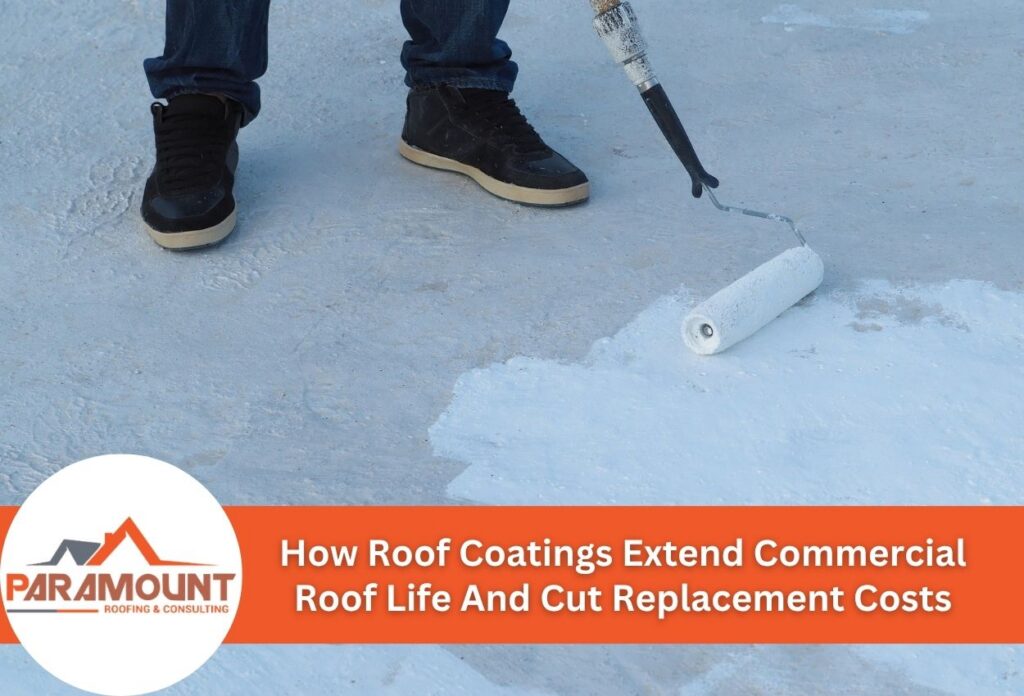

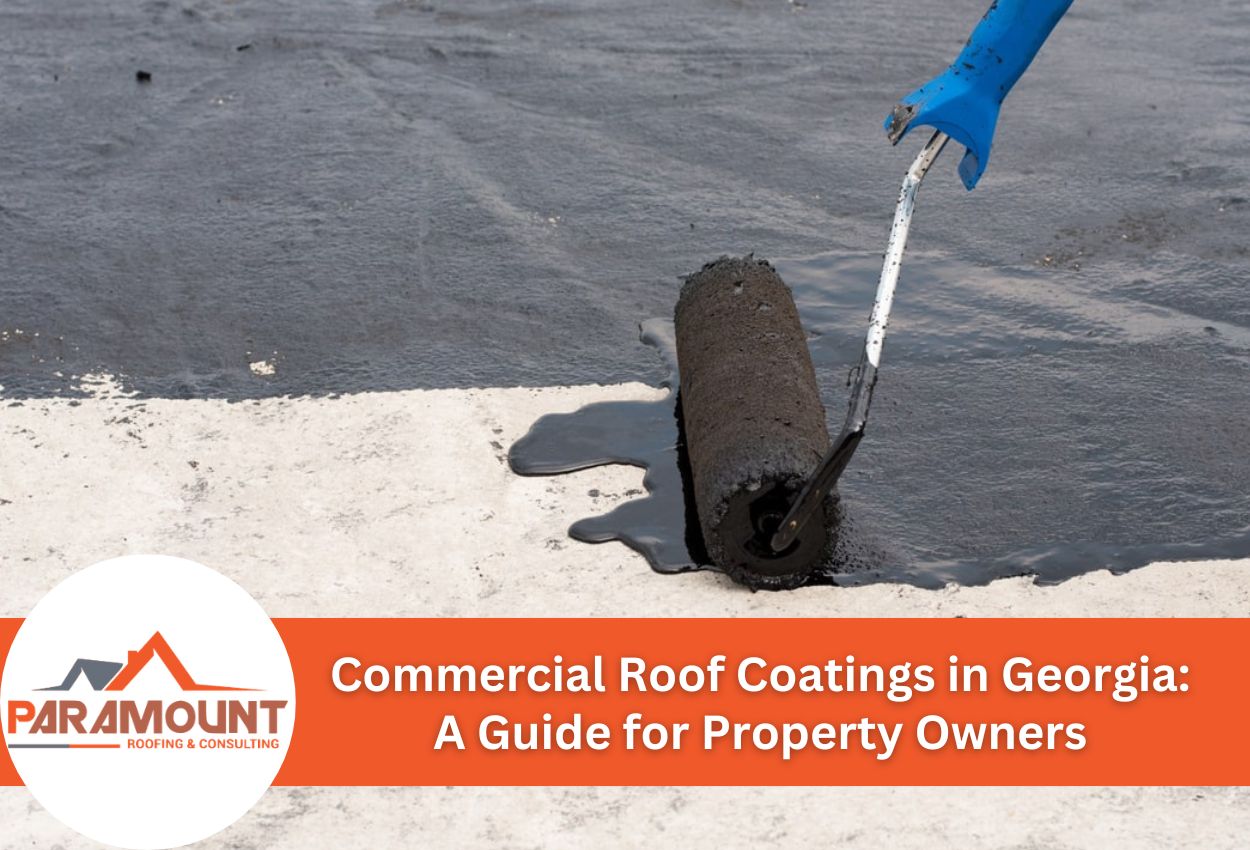
Yes, roof coatings can extend the life of a commercial roof by 10 to 20 years, depending on the coating type, how well it’s applied, and the condition of the existing roof. That range makes coating one of the most cost-effective options available to commercial property owners who want to delay or avoid a full roof replacement.
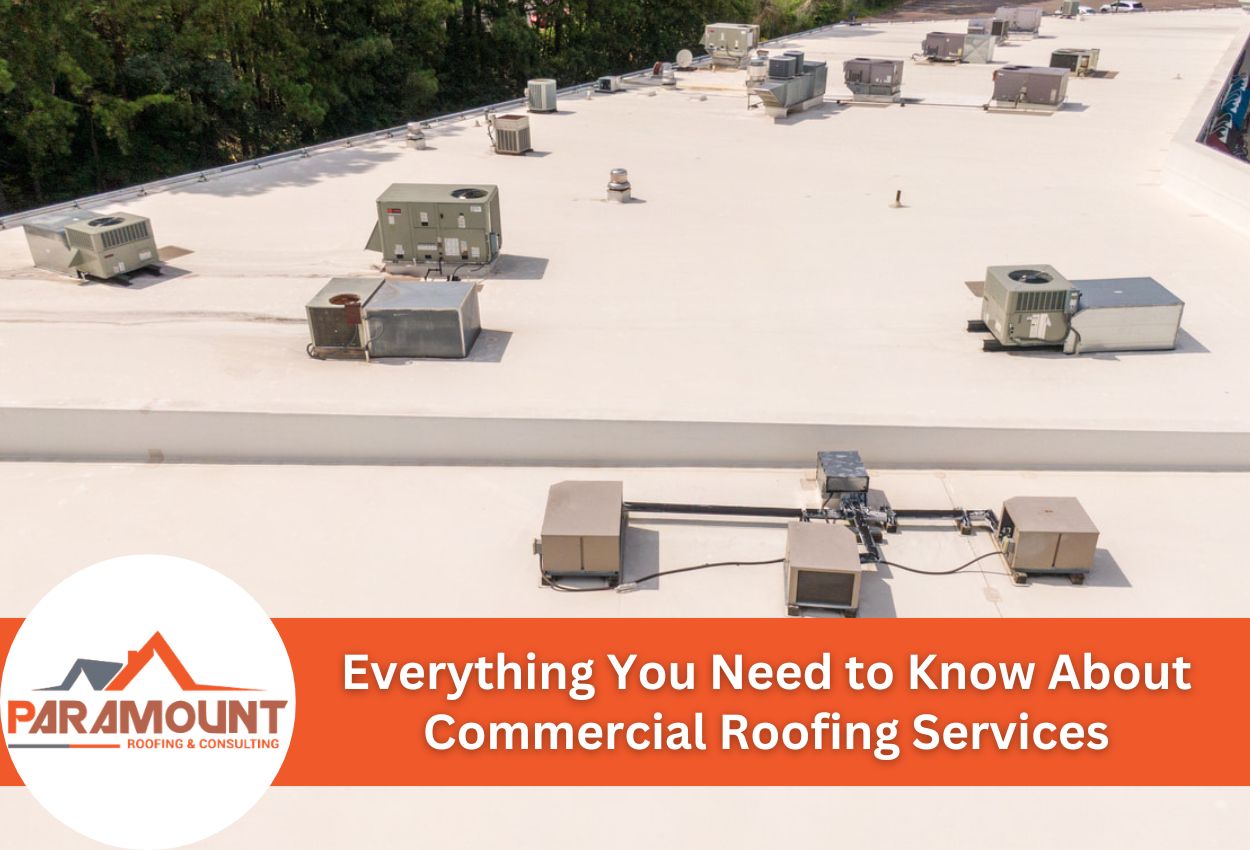
In the Atlanta area, that protection matters more than in many other markets. Summers regularly reach 88 degrees to 91 degrees Fahrenheit, annual rainfall averages around 50 inches, and low-slope commercial roofs across Douglasville, Marietta, Newnan, and surrounding counties face constant UV exposure and ponding water risk. Those conditions accelerate membrane aging, crack formation, and leaks faster than mild climates do.
How Do Roof Coatings Actually Protect and Extend a Commercial Roof’s Lifespan?
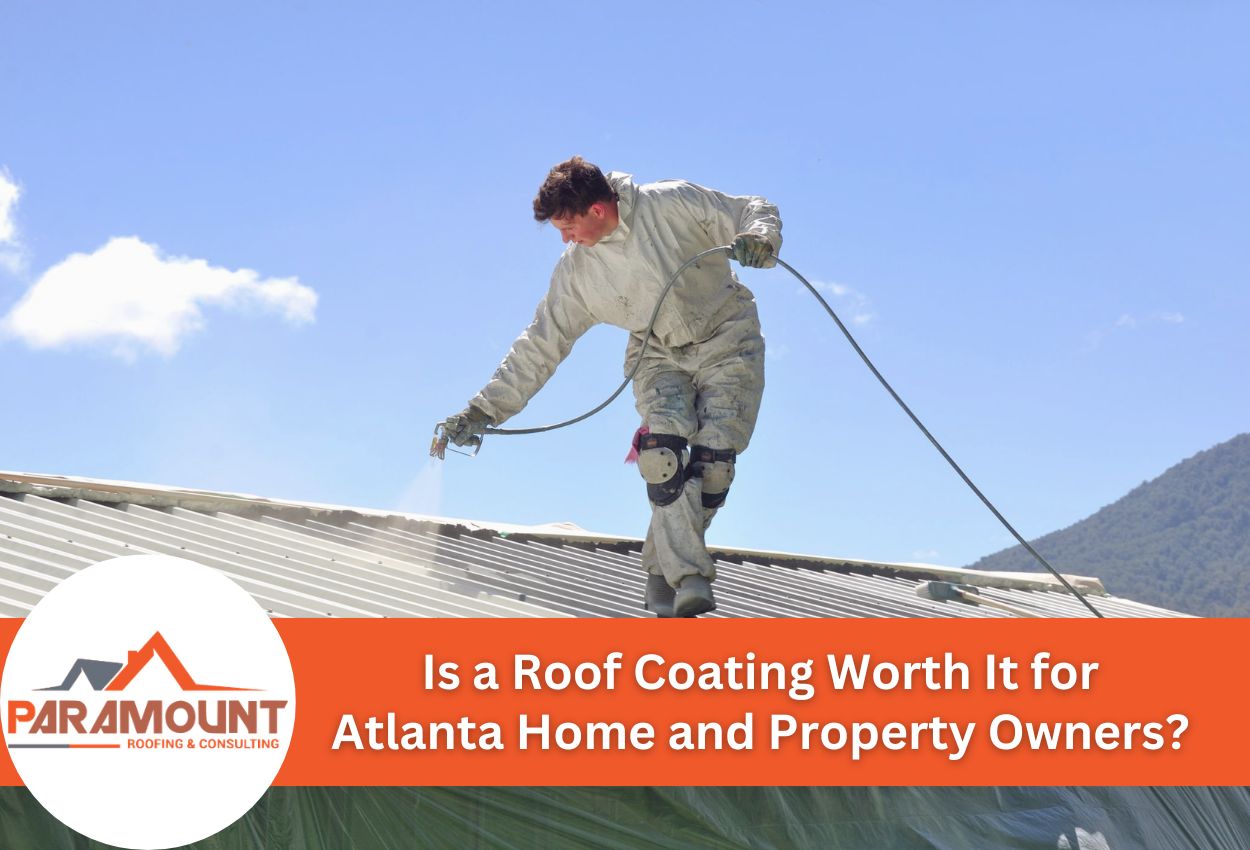
Roof coatings extend a commercial roof’s lifespan by blocking the three forces that degrade membranes fastest: UV radiation, thermal cycling, and ponding water. Silicone coatings reflect 80% to 90% of UV radiation before it can break down the membrane beneath. That matters because uncoated membranes can lose up to 50% of their reflectivity within 5 to 7 years of direct sun exposure, after which heat absorption accelerates oxidation and cracking at a much faster rate.
Thermal Movement and Seam Protection
Atlanta-area commercial roofs swing from winter lows in the low 40s Fahrenheit to summer highs above 90 degrees. That seasonal range puts constant stress on membrane seams and surface materials. Elastomeric coatings are built for this: they can expand and contract up to 300% without cracking, following the membrane through temperature changes instead of pulling apart at weak points. Seam failures account for an estimated 90% of commercial roof leaks, and a seamless coating application eliminates that failure point.
When Coatings Cannot Help
Coating effectiveness depends on what is underneath. A coating bonds to the existing membrane and reinforces it, but it cannot fix a roof that is already failing structurally. Roofs with more than 25% wet insulation or widespread membrane failure are typically not good candidates for coating. Applying a coating over damaged underlayment traps moisture and accelerates the decay it was meant to slow.
Which Roof Coating Type Lasts Longest on a Flat Commercial Roof?
Silicone coatings last the longest on flat commercial roofs, with an expected lifespan of 15 to 20 years and the strongest resistance to ponding water and UV radiation of any coating type available.
| Coating Type | Expected Lifespan | Ponding Water Resistance | UV Reflectivity | Ideal Underlayment | Reapplication Interval |
|---|---|---|---|---|---|
| Silicone | 15 to 20 years | Excellent | 85% to 90% | TPO, EPDM, modified bitumen | 10 to 15 years |
| Acrylic | 10 to 15 years | Fair: not suited for standing water | 75% to 85% | Metal, modified bitumen, SPF | 5 to 10 years |
| Polyurethane | 10 to 15 years | Good | 70% to 80% | Concrete, metal, foam | 7 to 12 years |
| Asphalt/Aluminum | 5 to 10 years | Moderate | 60% to 70% | Built-up roofs, modified bitumen | 3 to 5 years |
| Elastomeric | 10 to 20 years | Good | 80% to 90% | TPO, EPDM, concrete, metal | 8 to 15 years |
For commercial property owners in greater Atlanta where annual rainfall averages around 50 inches and summer heat regularly tops 88 degrees, silicone is the strongest performer. Its excellent ponding water resistance and 85% to 90% UV reflectivity address the two conditions that shorten flat roof life fastest in this market.
Most quality coatings on well-maintained flat roofs answer the question of how long does roof coating last on a flat commercial roof with a range of 10 to 20 years, with silicone consistently reaching the higher end of that span. Acrylic coatings cost less upfront but require reapplication more often, making silicone the better long-term value for low-slope roofs that collect standing water after Georgia’s frequent rainstorms.
Does Roof Coating Stop Leaks, and How Often Should It Be Reapplied?
Yes, roof coatings stop most commercial roof leaks, but only under the right conditions. Seamless coatings bridge hairline cracks, but gaps up to 1/8 inch wide require a flashing-grade sealant before liquid coating closes surface pores and seals seams. Seam and gap failures account for about 90% of commercial roof leaks, and a properly applied seamless coating directly addresses both failure points. However, coatings applied over active structural leaks or saturated insulation will fail. The coating needs a sound underlayment to bond to.
- Annual inspection: Check mil thickness, seam adhesion, and surface wear every 12 months; many manufacturer warranties require documented inspections every 1 to 2 years to stay valid
- Mid-cycle inspection (years 5 to 7): Measure remaining mil thickness: thinning beyond spec means reapplication is coming sooner than the full interval
- Reapplication interval by type: Silicone every 10 to 15 years. Elastomeric every 8 to 15 years. Polyurethane every 7 to 12 years. Acrylic every 5 to 10 years. Asphalt every 3 to 5 years
The cost difference between staying on schedule and ignoring degradation is stark. Reapplication runs $0.50 to $2.00 per square foot. Skipping it leads to emergency leak repairs costing $500 to $2,500+ per incident plus any interior damage liability. For Atlanta-area property owners researching how often to reapply roof coating on a commercial building, the answer depends on coating type and inspection findings, not a fixed calendar date. A proactive commercial roof maintenance program is the most reliable way to stay ahead of degradation and keep reapplication on schedule.
Is Roof Coating Worth It? Cost Savings Compared to Full Commercial Roof Replacement
Building owners who coat rather than replace a 20,000 sq ft roof can save $40,000 to $350,000 in a single replacement cycle, making roof coating one of the strongest financial decisions available to commercial property owners in the Atlanta metro.
| Scenario | Upfront Cost per Sq Ft | Expected Life Added (Years) | Total 20-Year Cost per Sq Ft | Downtime/Disruption Level |
|---|---|---|---|---|
| Roof Coating Application | $2 to $6 | 10 to 20 years | $2 to $6 | Low: typically 1 to 3 days |
| Roof Coating + Reapplication at Year 12 | $2 to $6 (initial) + $0.50 to $2.00 (recoat) | 20+ years | $2.50 to $8 | Low: 1 to 3 days per application |
| Full Roof Replacement | $10 to $20 | 20 to 30 years | $10 to $20 | High: 1 to 4 weeks: active building disruption |
The gap between coating and replacement costs is wide, and Georgia’s climate makes that gap matter even more. High UV exposure, annual rainfall around 50 inches, and frequent storms in Douglasville and the greater Atlanta area accelerate unprotected membrane degradation faster than in milder markets, meaning deferred maintenance often leads to emergency replacement rather than a planned one.
On a 20,000 sq ft low-slope commercial roof, a full replacement at $10 to $20 per sq ft runs $200,000 to $400,000, while a coating cycle with reapplication totals $50,000 to $160,000 over the same period. For commercial property owners researching commercial roof coating versus roof replacement cost savings, the numbers consistently favor coating on roofs with a sound underlayment and fewer than 25% wet insulation zones.
Should You Coat or Replace? How to Decide Before Calling a Contractor
A roof qualifies for coating if it passes six measurable criteria: skip even one, and coating may cost more than it saves.
- Roof age and remaining structural life: Coating is a sound option if the roof has at least 5 years of structural life left. Roofs nearing full failure need replacement, not a surface treatment.
- Moisture saturation level: Coating is not recommended if an infrared or nuclear moisture scan shows more than 25% insulation saturation. Trapped moisture under a new coating accelerates decay instead of stopping it.
- Ponding water drainage: Coating works if standing water drains within 48 hours after rainfall, which meets International Building Code standards. Chronic ponding that lingers longer signals a drainage problem no coating can solve.
- Membrane adhesion strength: Peel adhesion tests should show at least 2.0 pounds per linear inch (PLI) before coating. Results below that threshold mean the membrane cannot hold a new coating bond reliably.
- Budget versus replacement cost: Coating typically runs 20% to 40% of full replacement cost, a range that makes it a strong financial option when the underlayment qualifies.
- Leak history and source: Isolated seam or gap leaks are coatable. Widespread roof deck failures are not: those require commercial roof repair or full replacement before any surface treatment makes sense.
Finding the best roof coatings for extending commercial roof lifespan starts with knowing which of these criteria the roof actually meets because the right coating type depends on those results, not on product marketing. A professional infrared or nuclear moisture scan, which typically costs $300 to $800 for a commercial roof, is the single most important step before any coating decision: it prevents investing in a solution the underlayment cannot support. Paramount Roofing & Consulting can assess all six criteria before any product is selected.
Ready to Stop Replacing and Start Protecting? Get a Roof Coating Assessment from Paramount Roofing & Consulting
A professional coating assessment can identify whether your roof qualifies for a solution that costs 20% to 40% of full replacement and extends service life by up to 20 years. For commercial property owners and facilities managers in Douglasville, Atlanta, and surrounding counties including Douglas, Cobb, Gwinnett, Fayette, and Coweta, that difference can mean $40,000 to $350,000 in avoided replacement costs on a single roof cycle.
Paramount Roofing & Consulting offers no-obligation commercial roof inspections that include a written coating recommendation and a direct cost comparison against replacement. There is no pressure, just the information needed to make a sound decision.
Schedule your free roof inspection.
Not ready to schedule? Learn more about commercial roof coatings.